Risotto with Sausages

risotto-plated
I have a wonderful story to take us into the holiday season.  It begins on a dark and stormy night.  RJ had a late meeting and I was staying with my parents to avoid the long drive in the rain.  cookbooksA colleague of RJ’s, Cameron, found out that his plane was cancelled due to the weather, and RJ offered him the couch at our condo for the evening.  Though I was not there to meet Cameron, I was apparently quite the topic of conversation.  Cameron took one look at my shelves upon shelves of cookbooks and back issues of food magazines, and began to question RJ about his wife the cook. (please note that the accompanying picture shows only about a quarter of the total space taken up by these books!)

RJ has never been wildly enthusiastic about my ridiculous number of cooking tomes, but he is always supportive when the food comes out!  He must, however, have said some good things about me, because about a week after Cameron’s visit we received a package in the mail.  Cameron had sent me a new cookbook for my collection!  His note indicated that it was one of his favorites and that he was happy to share it with someone who clearly would appreciate it.  

I found that package to be one of the most heart-warming things I had ever received.  Never having met Cameron, I was quite surprised that he would send me a gift, let alone such a thoughtful one!  I was tremendously touched.  All the more so when I tried my first recipe from the book and realized that it was just as much of a gem as he said.  So, thank you Cameron.  You’re welcome at our house anytime!

Risotto with Sausages, adapted from Marcella Hazan’s Essentials of Classic Italian Cooking (serves 6)

2 1/2 c. beef broth
2 1/2 c. water or chicken broth
4 Tbs. butter, divided
1 medium onion, cut in half and sliced thin (or minced fine for a much quicker caramelization)
2 Tbs. oil
3/4 lb. mild, sweet pork sausage, cut into disks about 1/3 inch thick
1/2 c. dry white wine
2 c. Arborio rice
Black pepper
1/2 c. freshly grated parmigiano-reggiano cheese
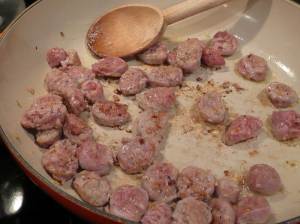
raw-sausage

Bring the broth and the water or chicken stock to a very slow, steady simmer in a medium saucepan. Melt 3 Tbs. butter in a dutch oven or heavy-bottomed saucepan over medium heat. Stir in the onion and cook until the onion becomes a deep caramel color (15-35 minutes depending on the size of the sliced/diced onions). Do not let the onions burn – make sure to stir frequently!

Remove half of the onions to a small dish and add 2 Tbs. oil to the rest on the stove. Add the sliced sausage. Cook until the sausage is browned well on both sides, then add the wine, stirring to scrape up any browned bits on the bottom of the pan. When the wine has bubbled away completely [don’t you just love how Marcella writes a cookbook??], add the rice, stirring quickly and thoroughly until the grains are coated well.
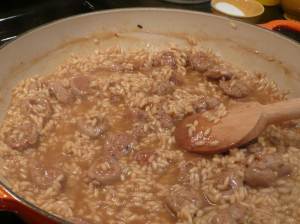
risotto-broth

Add 1/2 c. of simmering broth mixture to the rice, and cook, stirring constantly, until all the liquid is gone. “You must never stop stirring,” says Marcella. When there is no more liquid in the rice, add another 1/2 c. of broth, continuing always to stir. Begin to taste the rice after 20 min. of cooking. Finish cooking the rice with broth or, if you run out, with water. It is done when it is tender, but firm to the bite. As it approaches that stage, gradually reduce the amount of liquid you’re adding. The final risotto should be served slightly moist but not runny.

Off the heat, season to taste with pepper, 1 Tbs. butter, the grated parmesan and the caramelized onions you set aside earlier. You may also choose to stir in 1 Tbs. finely chopped sage. Taste and see if you need any salt – usually the parmesan does the trick.

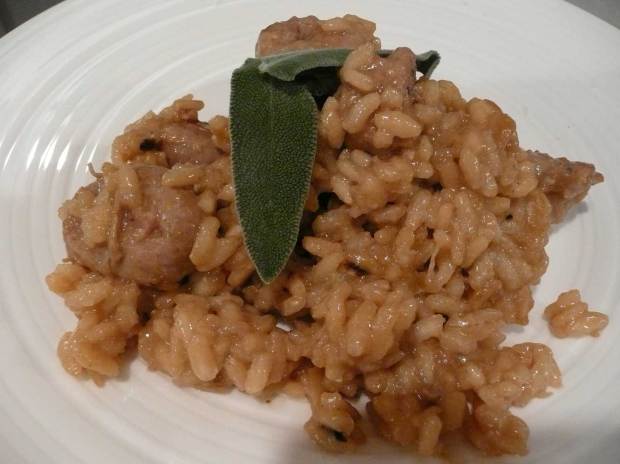
And to Cameron, if you’re out there reading, this is all that was left:
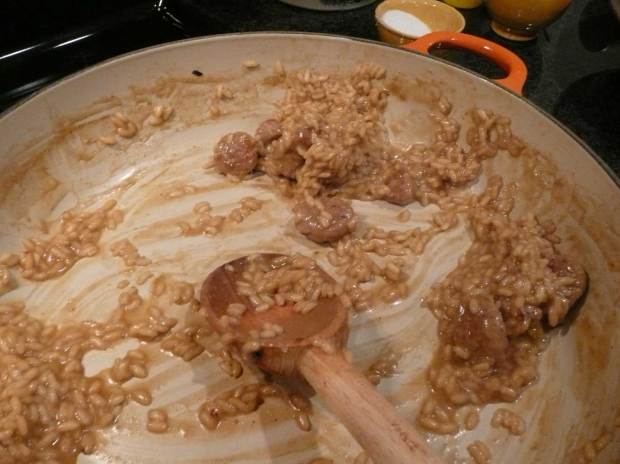
risotto-gone

Prosciutto-Sage Pork Roast

Roast Pork Loin with Prosciutto-Sage Butter

Before my current job at a museum, I worked at a non-profit art gallery in Boston.  What I have come to find about the people that work in the arts – not so much the artists themselves but the ‘gallerinas’, the fundraising folks, the museum educators – is that they really like to eat and cook.  At the gallery, my colleagues and I would compare gourmet leftovers and fancy composed salads on our lunch break.  To celebrate a big sale or a successful opening, we would treat ourselves to fancy cheese, oysters and pate at the french restaurant across the street or even go out to the newest “it” restaurant in the South End.  I wonder if an appreciation for culinary arts is a natural extension of a love of the visual arts.  It is said that we eat with our eyes first…

In any case, one recipe shared over that convivial lunch table surrounded by paintings is the one that follows.  My dear friend Caroline, who generally is not fond of pork, shared this super simple preparation with me.  An easy-to-make compound butter really ramps up the flavor and presentation of the relatively inexpensive pork roast.  Perfect for the holidays and as an addition to my running list of don’t-break-the-bank-but-impress-your-guests-anyway recipes.  I have, on other occasions, mixed in a heavy tablespoon of roquefort cheese with the butter for a bit of a twist, but this is Caroline’s original recipe and it is fabulous.  It went so fast at my mom’s dinner party that by the time I’d grabbed my camera for the final shot, all that was left is what you see above!

Roast Pork with Prosciutto-Sage Butter

1/4 lb. thinly sliced prosciutto di Parma
2 Tbs. minced shallots
6-12 leaves fresh sage, chopped (choose number of leaves depending on size of the leaves and your taste for sage)
1 stick unsalted butter, softened
salt and pepper to taste
monstrous boneless pork loin (it doesn’t matter the size – if you have butter left over after coating it, just freeze it and use it later)

Preheat oven to 400 degrees F.  In a small bowl, mix together the prosciutto, shallots, chopped sage and softened butter.  Salt and pepper to taste, adjusting amount of salt if you are using salted butter.  Pork Loin roastIf you have any fancy flavored salts, this is a good time to use them as well – I have a “Sel de Merlot” from France which is delicious in this recipe.  Set butter aside.
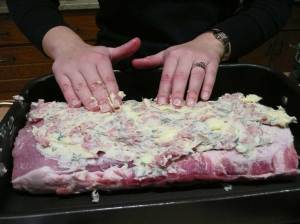
Place pork on a cutting board, fatty side up.  Trim off as much fat as you can without completely (re)butchering the loin and wasting perfectly good meat [see photo :)].  The idea is to replace most of the pork fat with the flavored butter fat. 

Pork roast with Flavored butterIf you think you made more butter than your pork loin will require, scoop butter out of the small bowl with a spoon in smaller batches so that you don’t contaminate the unused butter.  In my case, having such a monstrous loin, I just slathered the whole stick on there with my hands.  Definitely make sure you spread the butter out evenly and that the goodies are distributed across the top of the meat.
Roast the loin in the oven at 400 degrees for 15-20 minutes.  Then, turn the oven heat down to 325 degrees and cook for another 20 minutes per pound or so.  You should take the pork out of the oven when a meat thermometer stuck horizontally into the meat (parallel to the cutting board and in the center of the loin) reads 150 degrees internal temperature – I usually check it after an hour to see where I stand.  Do not overcook or the roast will be dry and nowhere near as yummy.  Again, feel free to experiment with different flavor combinations in the butter – if Michelangelo, Monet, and Picasso never experimented, the art scene would be pretty bland today!

Weeknight Enchiladas

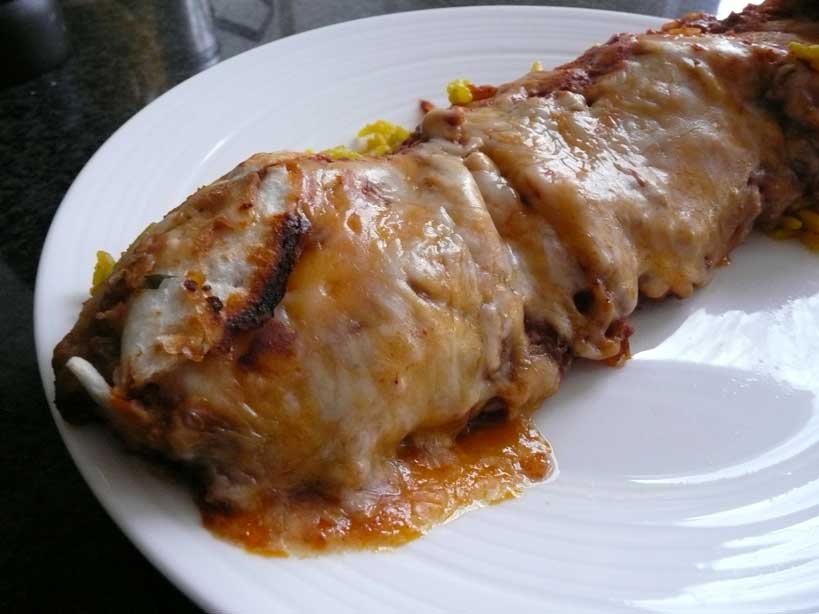
enchilada-sunny-finalAs promised, below is my favorite recipe for leftover chicken.  Truth be told, however, RJ and I often go to the grocery store and buy a rotisserie chicken for the sole purpose of making these enchiladas.  They are fast to come together, delicious, and they work well for lunch the next day too.  Making your own enchilada sauce is optional, but the El Paso stuff in the can is nowhere near as flavorful or satisfying as the homemade.  It doesn’t add too much time to your prep either.  I, too, will be brief today, and just let the recipe speak for itself.

Quick Enchiladas, copied from The Best 30-Minute Recipe
quick enchiladas

2 c. finely shredded chicken, beef or pork
3/4 c. refried beans
1 1/2 c. enchilada sauce (either from the can or see the recipe below)
2 oz. canned chopped green chiles (optional)
1/2 c. chopped cilantro
3 c. shredded cheddar cheese
pack of 8 inch corn or flour tortillas

Preheat oven to 450 degrees.  Lightly spray 13×9 in baking dish with vegetable oil spray and set aside.

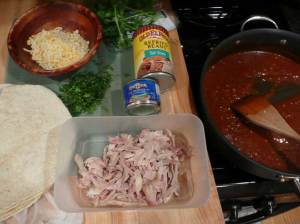
Combine the meat, refried beans, 1/2 cup of the enchilada sauce, and – if using – 2 oz. chopped green chiles in a microwave-safe bowl and cover with plastic wrap.  Microwave on high until hot, 1-3 minutes.  Stir cilantro and 1 1/2 cups of the cheddar cheese into chicken mixture and set aside.enchilada-mix

Microwave your tortillas until warm and pliable, about 40-60 seconds.  Arrange warm tortillas on clean work surface.  Divide meat mixture evenly among tortillas, about 1/4 cup filling per enchilada, and spread evenly down center of each.  Tightly roll tortilla around filling.  Place seam-side down in baking dish.

Lightly spray enchiladas with vegetable oil spray. Pour 1 c. enchilada sauce over enchiladas to coat.  Sprinkle 1 1/2 shredded cheese over enchiladas.  Cover baking dish with foil and bake until enchiladas are heated through, 10 minutes.  Remove foil and continue to bake until cheese is completely melted, about 5 minutes longer.  Serve with sour cream and (optional) warmed enchilada sauce.

Fast Enchilada Sauce

enchilada-sauce
1 Tbs. vegetable oil
1 onion, minced
Salt and pepper
3 garlic cloves, minced
3 Tbs. chili powder
2 tsp. ground cumin
2 tsp. sugar
2 (8 oz.) cans tomato sauce
1/2 c. water

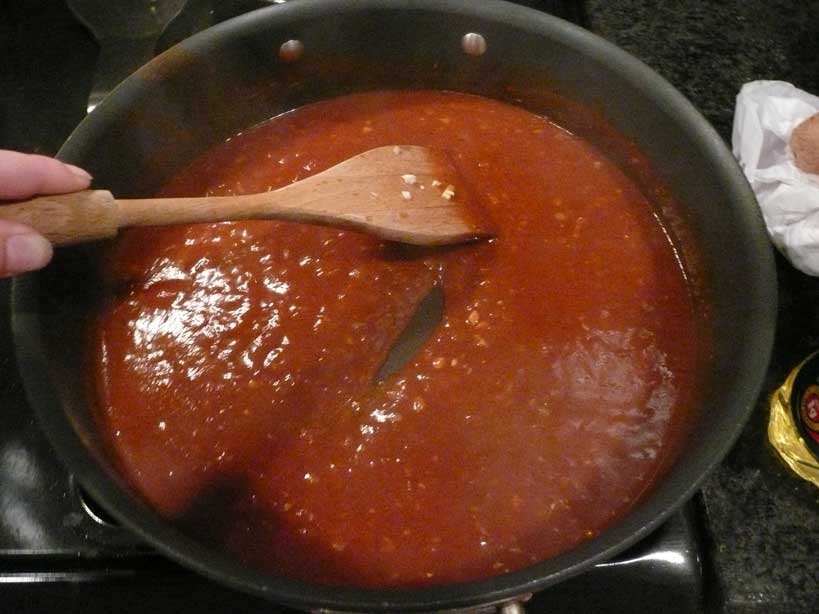
Heat oil in a 12-inch skillet over medium heat until very hot.  Add minced onion and 1/2 tsp. salt and cook until onions soften, about 5 min.  Stir in garlic, chili powder, cumin and sugar.  Cook until fragrant, about 30 seconds.  Stir in tomato sauce and water.  Bring to simmer and cook until slightly thickened (see picture) about 5 minutes.  Season with salt and pepper to taste.  If you like a smoother sauce, strain through a fine-mesh strainer.

Roast Chicken

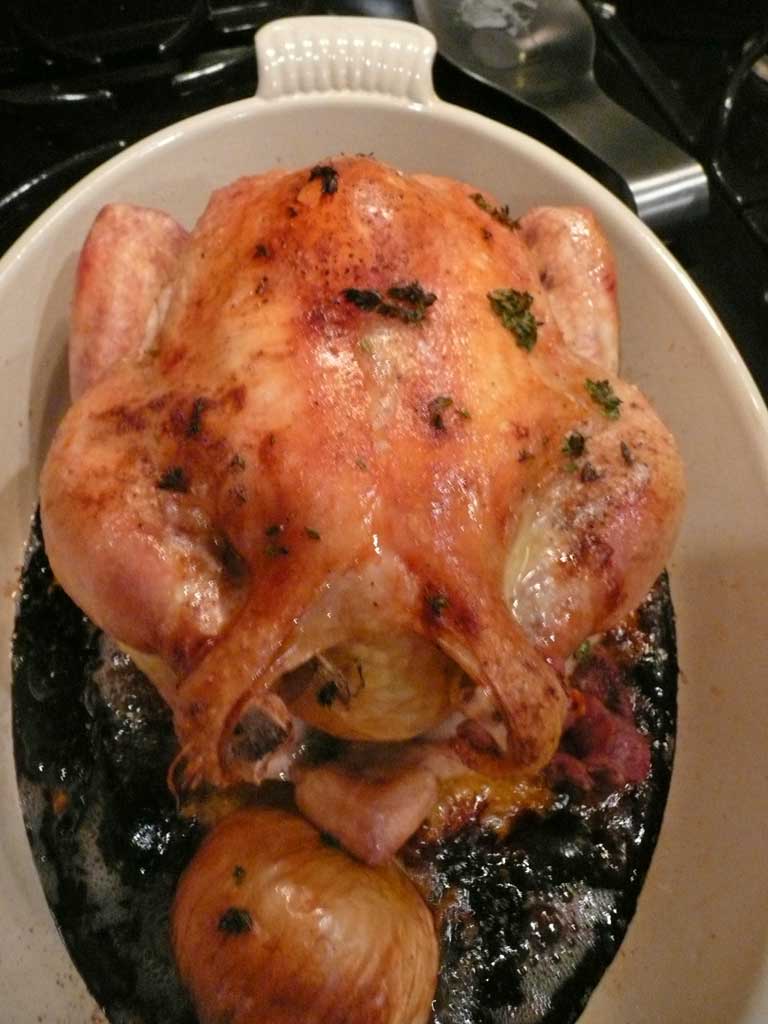
chickenForgive me yet another roasting post.  I henceforth declare (retroactively) this past week Roasting Week, in homage to all the crispy, browned, concentrated flavors that dry oven heat bestows upon us.  This does not count as a real post, I know.  I don’t have any teaser images or elaborate descriptions.  I just have something so delicious and essential that it must be added to the blog.  This ‘recipe’, if you can even call it that, serves so many purposes I simply have to share it.  For one, it looks great and is perfect for entertaining.  Second, it is quite adaptable to all manner of taste and preference.  Third, it leaves you with some great leftovers (which I will be dealing with in a future post).  In any case, read the post through before you start cooking so you can understand the whole concept…

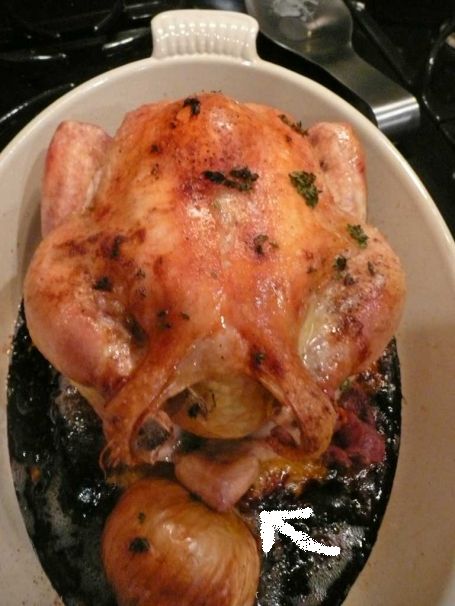
The method is as follows: buy yourself a whole roasting chicken and get a good one (read: free range preferable, super-market bird less than acceptable).  I describe my bad experience with a not-so-special bird here, so try not to make the same mistake I did – I promise it makes a difference!  Rinse the bird with cold water inside and out, then pat dry.  Remove excess fat from the outside and inside of the bird.  Personally, I keep the “pope’s nose” (the fatty flap at the opening of the bird’s cavity) intact ‘cuz my Gammy likes it, but if your grandmother isn’t around, ditch it with the rest.  Salt and pepper the inside and outside of the bird to your own taste.

Now is your chance to improvise.  You want to stuff the bird with some aromatics, which can include any combination of the following: a halved onion; a halved head of garlic; a halved lemon; sprigs of thyme, rosemary and/or sage.  You want to fill the cavity without ramming junk in there to the breaking point.  

Depending on what you put inside the bird, you want to mix your basting butter accordingly.  If my bird is stuffed with herbs, I might make a minced shallot butter.  If I stuff with lemon, then parsley and tarragon butter tastes delicious.  Mix and match to your delight!  You will want your basting butter to be a mixture of 1 tablespoon of butter per pound of chicken plus some combination of chopped herbs, lemon juice, minced shallots or garlic.

Once the chicken is stuffed, tie the legs together with twine, or, as in the picture above, cut small holes in the skin of the bird below the leg and near to the cavity, then shove the ends of the legs into them.  This will ensure that the legs of the bird stay close to the breast.  Put the bird in a 425 degree oven for 20 minutes.  At the end of the 20 minutes, baste the bird with your melted butter mixture.  Turn the oven heat down to 375.  Cook for a total time (including the first 20 minutes) of 15-20 minutes per pound.  Every 15 minutes or so, baste with the flavored butter mixture.

When the time’s up, remove the chicken from the oven.  If you’re worried about done-ness, prick the thigh of the chicken (below the leg) with the tip of a knife and take a peek at the juices that come out.  If they’re red or pink, you want to put it back in the oven for a bit.  If they’re clear, let the chicken rest on a cutting board for 10 minutes to let the juices redistribute.  Carve and serve!

Now – you may be asking yourselves why it looks like the juices around my chicken are black in the pan.  For one thing, they were not actually black.  They were very dark brown.  And they looked that way because I modified my traditional prep (above) to add in tips from Anthony Bourdain‘s Les Halles Cookbook.  I put the giblets and half an onion on a pan and rested the raw chicken body on top of all of them.  Then I poured about a cup of white wine around the bottom of the pan and followed my own directions, above, for roasting the chicken.  This allowed me a great base for a pan sauce – I just had to put the chicken and other solids on a cutting board then mix some beurre manie and chicken stock into the pan to scrape up the fond (leftover roasted chicken bits) from the bottom of the pan.  This will result in a yummy chicken-y sauce which you can use just as is, or you can add a couple teaspoons of balsamic vinegar and cook a few minutes before pouring into a gravy dish.

Enjoy my mom’s chicken recipe – it’s no family secret or anything, but it’s a family classic.

Update: Since there seems to be some confusion about the issue, please see below picture of “The Pope’s Nose”pope2