
Since I started food blogging, I have participated in a group called “The Barefoot Bloggers.” The idea was a good one — every other week a different participant chose a recipe from one of Ina Garten’s cookbooks and the group would all post on the same recipe. I loved being able to read how all of the creative home cooks out there altered the recipes to suit their tastes, their available ingredients, or their equipment limitations. It’s amazing to see how many variations on spaghetti and meatballs are possible!

Yet, a week before my honeymoon, I pointed out to the group organizer that of the 200 or so participants, only about 3/4 of them were actually posting to their blogs on a regular basis, let alone posting on the group recipe as was “required”. I thought it really took away from the experience if you tried to click each link on the blogroll and only slightly more than half had actually participated in the bi-weekly recipe challenge. Not too long after that email, I was unceremoniously cut from the group, along with a fair amount of others. Having only missed one or two weeks over the 6 months I’d been a member, I found the decision to cut me spiteful… but I digress.
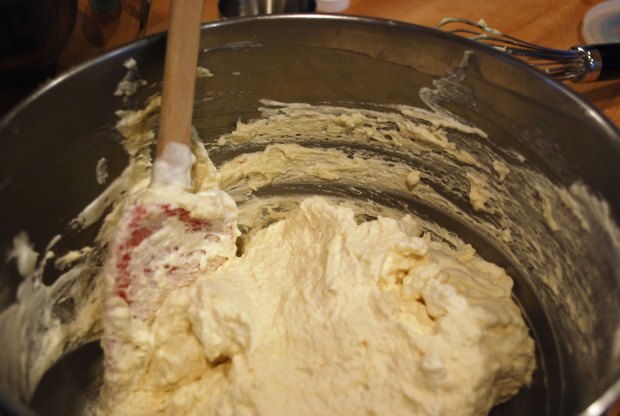
A far more exclusive “cooking the book” group is the Tuesdays with Dorie contingent. Now these ladies are diligent. Well-organized, fun, and committed, this group is one to emulate. Since they are not taking any new members, I am forced to do just that. I love reading their weekly adventures in shortbread, pies, and cakes (oh, the cakes!) as they cook their way through Dorie Greenspan’s Baking: From My Home to Yours. This week, I was unavoidably compelled to tag along. The recipe, chosen by Megan of My Baking Adventures, is Tiramisu Cake. I LOVE Tiramisu. Tiramisu cake was my wedding cake (there’s a 6 inch cake top in my parents’ fridge right now, in fact) since it was a perfect compromise between chocolate (RJ’s favorite but somehow kinda morbid for a wedding — am I crazy?) and the traditional 
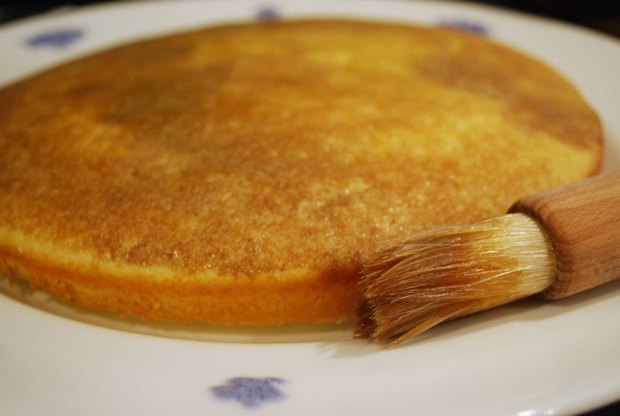
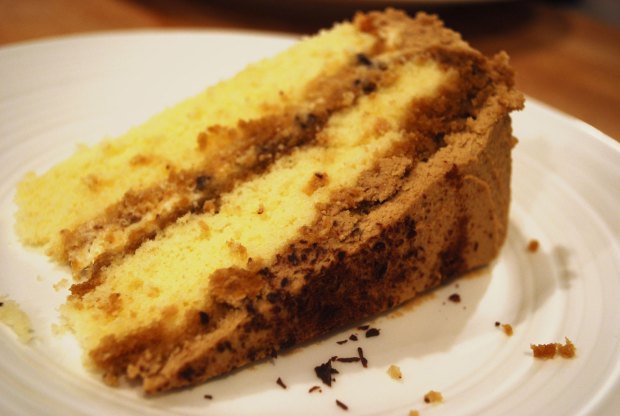
So, this week, I played along. Though I’m not on the official blogroll, making this cake and eating it was rewarding enough! RJ called it “decadent and scrumptious” (with only a modicum of sarcasm over the literary language of food writing). I thought it was very good, though the multiple steps and extended effort made me ask more than once “why aren’t I making real tiramisu?” The cake was certainly delicious, with a tight crumb and a perfect balance of the ascerbic coffee, the slight booziness of the alcohol, and the sweetness of the creamy filling. I doubted the balance at first and did not use all of the “espresso syrup” suggested in the recipe, and I regret that — going forward I will trust in Dorie!
Check out the recipe by visiting Megan, at My Baking Adventures.
 Generally I consider glazed fruit tarts to be a summer treat – something ideal for the back porch on a muggy evening after a meal of grilled meats and cold beer. Nothing beats the supple flavor of a juicy strawberry on a light lemon custard and buttery sablé crust after a hot day. Only in-season and perfectly ripe berries are worthy of such a spotlight: thus summer and fruit tarts are inextricably linked in my mind – so much so that the tart concept doesn’t even occur to me when I think about making a dessert in the months from October to May.
 Press the dough evenly into the bottom and sides of a 9-1/2-inch fluted tart pan with a removable bottom—the dough sides should be 1/4 to 3/8 inch thick. To smooth the bottom, cover with plastic wrap and press with a flat-bottom measuring cup or glass. Freeze the covered shell for 30 minutes. Meanwhile, position a rack in the center of the oven and heat the oven to 400°F.
 In a small saucepan, heat the butter over medium-high heat until it melts and the milk solids turn brown, swirling the pan occasionally for even browning, about 3 minutes. Immediately pour into a small heatproof bowl to stop the cooking.
 Spread the filling evenly in the tart shell and set aside at room temperature while you prepare the topping.
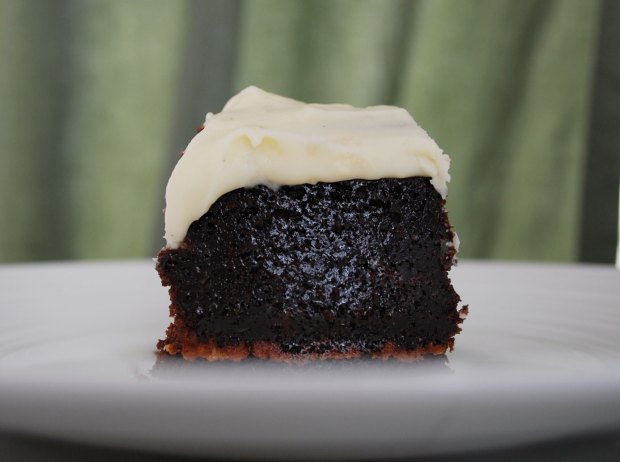
 On our recent trip to San Francisco, RJ and I learned first hand how much more friendly the people of California are as opposed to the crowds in Boston. Everywhere we went, people tried to convince us to move out West – whereas in New England you can hardly get a stranger to talk to you even if you’ve already moved there and just want to make a new friend! So many recent imports to Boston have told me that it is rather impossible to meet people here, since everyone who grew up around town or went to school in the city already knows each other, and no one is particularly welcoming or friendly. Cliquey, I think they called it. In San Francisco, Tahoe, and Napa RJ and I found ourselves chatting with people of all ages and originating from around the world, all settled in California and not planning to ever leave. One such man was sitting next to us as we sipped Irish Coffee at the
  For the cake:
 In a small bowl, combine sour cream, eggs and vanilla; mix well. Add to Guinness mixture. Add flour and baking soda, and whisk again until smooth. Pour into buttered pan, and bake until risen and firm, 45 minutes to one hour. Place pan on a wire rack and cool completely in pan.

 Preheat oven to 350 degrees. Butter an 8×8 inch glass baking dish. Whisk flour, ginger, baking soda, cinnamon, nutmeg, allspice, cloves and salt in medium bowl.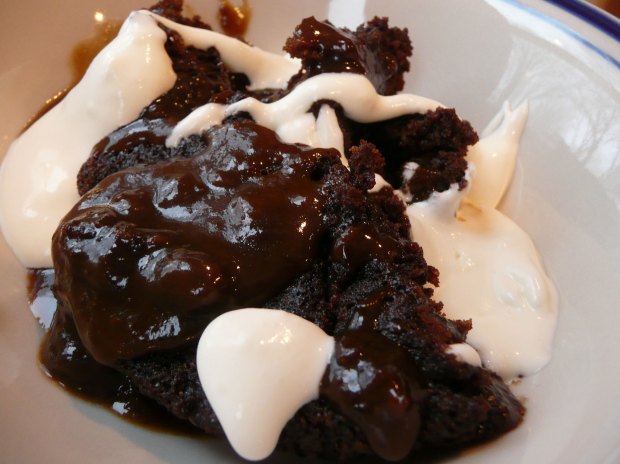
 From My Table...to Yours