Magazine Review: “Fine Cooking” and Delicata Squash

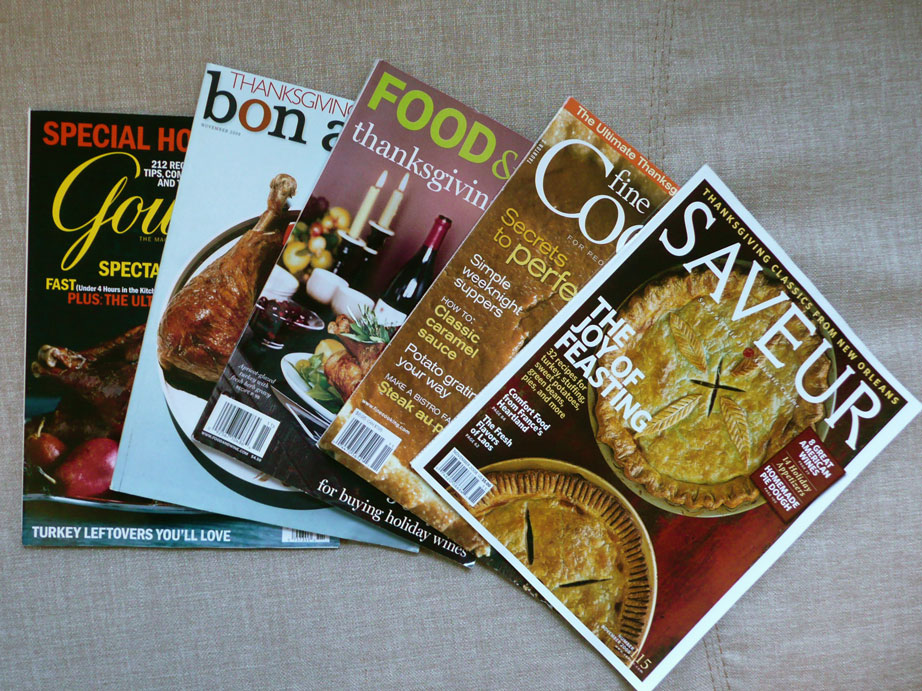
Food MagazinesI have taken on a new mission – you know, to keep things interesting here at “From My Table.”  Since I am a confessed food magazine addict and self-proclaimed connoisseur, I have decided to begin a series of reviews of popular cooking magazines.  To make it as fair a contest as possible, I will be comparing Thanksgiving issues – the one issue of the year where every food mag worth its weight in gravy will pull out all the stops.  In theory, the November issue of an epicurean publication (the issue with the highest sales for the year) will feature the best recipes, photos, and informational articles while showcasing any editorial biases in clear relief against rival periodicals.  When the basic building blocks are the same – turkey, cranberries, pumpkin, squash, and stuffing – one cannot help but notice if a particular magazine adheres to strict traditional techniques or, at the other extreme, commits blasphemy by defiling our American heritage (vanilla-cranberry foam?  Bread-less stuffing?  Come on, people!)

Here are my objective criteria:
• Ratio of the # of magazine pages (not including covers) to the # of full-page advertisements
• # of Recipes
• News-stand Price
• Price per Recipe
• # of “advertorials” – those ads that pose as articles or recipe sections to get you to buy their product.  Sometimes it is very difficult to tell they are not part of the magazine.
• Is a recipe index supplied?  How are the recipes sorted?

And here are my subjective criteria:
• How good is the photography?  How plentiful, mouthwatering, and informative is it?
• What are some of the unique or particularly good sections or features this magazine provides every issue?
• What is the take on the Thanksgiving classics: modern? drastic? traditional? boring?
• What recipes from this issue do I most look forward to trying?  What recipes look particularly unappetizing?

*I will also be making one recipe from my “Can’t wait to try” list exactly as directed, and will report on my results.  I hope this gets everybody into the November spirit – can you hear the Jingle Bells?

The first to contend is FINE COOKING – one of my favorite magazines of all time (no bias on the part of this judge):

• 98 pages total : 23 pages of ads (23%)
• 35 Recipes
• News-stand price: $6.95
• Price per recipe: $0.20
• # of ads pretending to be articles: 0
• Recipe Index?
Yes, sorted by type (i.e. side dish, dessert, poultry, fish/seafood, etc.) and labeled by special interest (i.e. quick, make-ahead, mostly make-ahead, and vegetarian).  Also includes a nutritional index in the back of the magazine, which is a great addition…if you like reading that sort of information…

Photos: absolutely excellent, often giving multiple viewpoints (cut pie/uncut pie; preparation/finished product) and most certainly mouthwatering!  Every recipe is photographed at least once, which is a huge bonus.

Best Sections:
• Cooking Without Recipes (one master recipe is featured each month and several pages explain the different steps of the method – in this issue, how to make a potato gratin – as well as the many ways it can be adapted to your taste – e.g. bacon, leek and Gruyere or artichoke and Comte)
• Quick and Delicious (self-explanatory, no?)
• Food Science (this section explains the “Whys” behind cooking results – how to fix a pie crust that isn’t flaky or that is too crumbly, for example)
• Menus – the editors mix and match the recipes from the issue into different menus, such as “Sunday Supper” or “Casual Dinner Party”

Best Features:
• Recipe Variations are provided with many of the sections, such as “try replacing red wine vinegar with balsamic for a sweeter flavor” or “try leftovers from this recipe cold in a pasta salad with green beans and feta”
• No advertisements are placed in the central recipe section of the magazine.

Thanksgiving at the Fine Cooking house:
• “Seven of the country’s best chefs share seven new takes on holiday classics” – Roasted Turkey with Juniper-Ginger Butter and Pan Gravy; Mashed Potatoes with Caramelized Shallots; Maple-Tangerine Cranberry Sauce; Sugar and Spice Pumpkin Pie with Ginger Cream.  Ruling?  Classic with a twist.

Particularly Unappetizing:
• Orange Crème Caramel
• Rosemary’s Pink Diamond Fizz
• Vietnamese Tilapia with Turmeric & Dill

I’m looking forward to cooking:Delicata Squash Recipe
• Sugar and Spice Pumpkin Pie with Brandied Ginger Cream
• *Delicata Squash with Caramelized Shallots and Sherry
• Cauliflower with Brown Butter, Pears, Sage, and Hazelnuts
• Steak au Poivre with Cognac Sauce

*Delicata Squash with Caramelized Shallots and Sherry
Serves four.  You can assemble this dish up to 2 hours before baking.

1 1/4 lb. delicata squash
2 Tbs. olive oil
1/4 c. dry sherry (such as fino)
Kosher salt and freshly ground black pepper
1 Tbs. unsalted butter
1 c. thinly sliced shallots (2 to 3 large)
4 tsp. finely chopped fresh sage

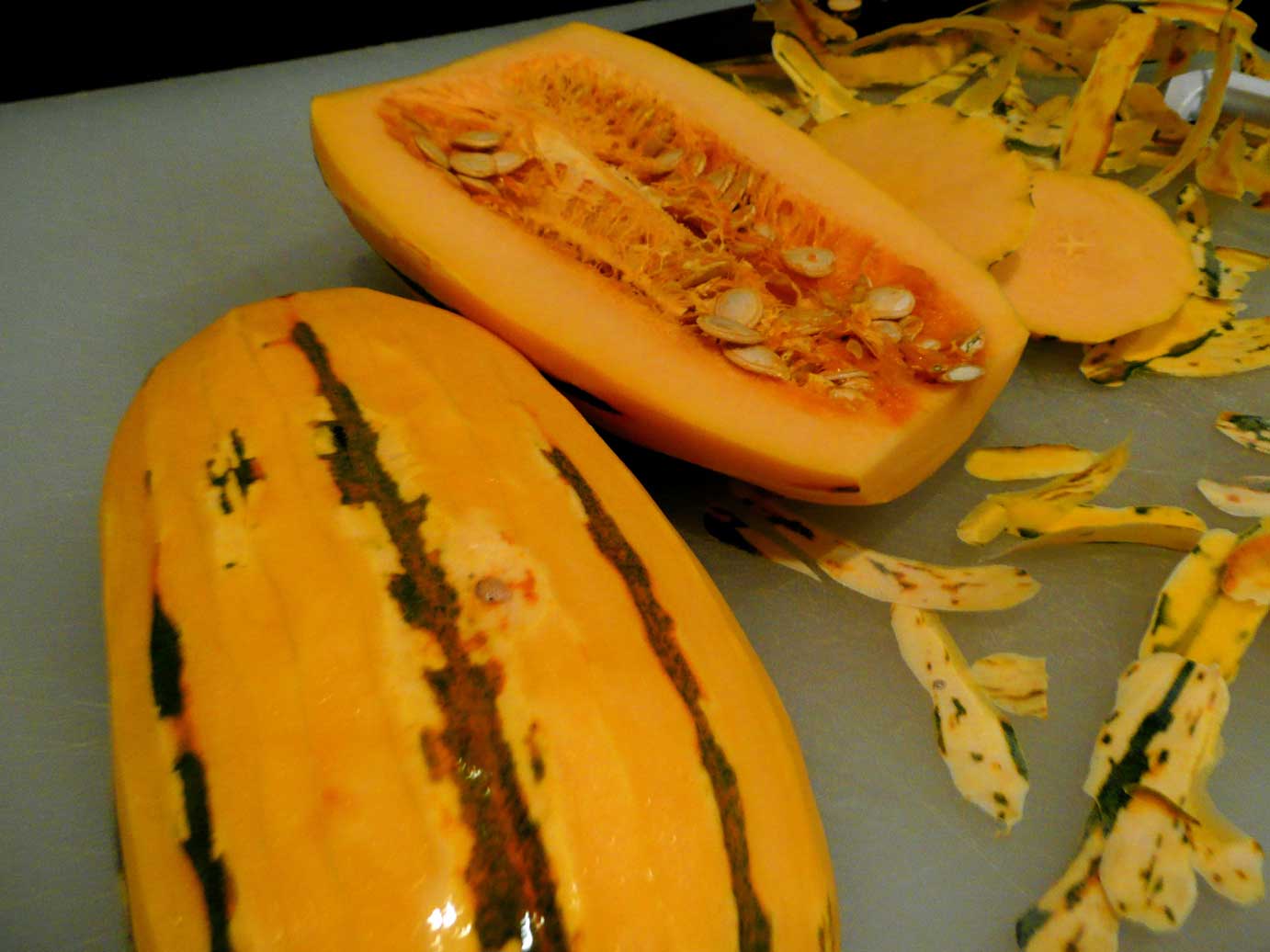
Heat the oven to 350 degrees.  Peel the squash, leaving the skin in the crevices (it’s tender enough to eat).  Trim the ends.  Cut the squash in half lengthwise and scoop out the seeds.  Slice the halves crosswise 1/2 inch thick.Saute of Delicata squash
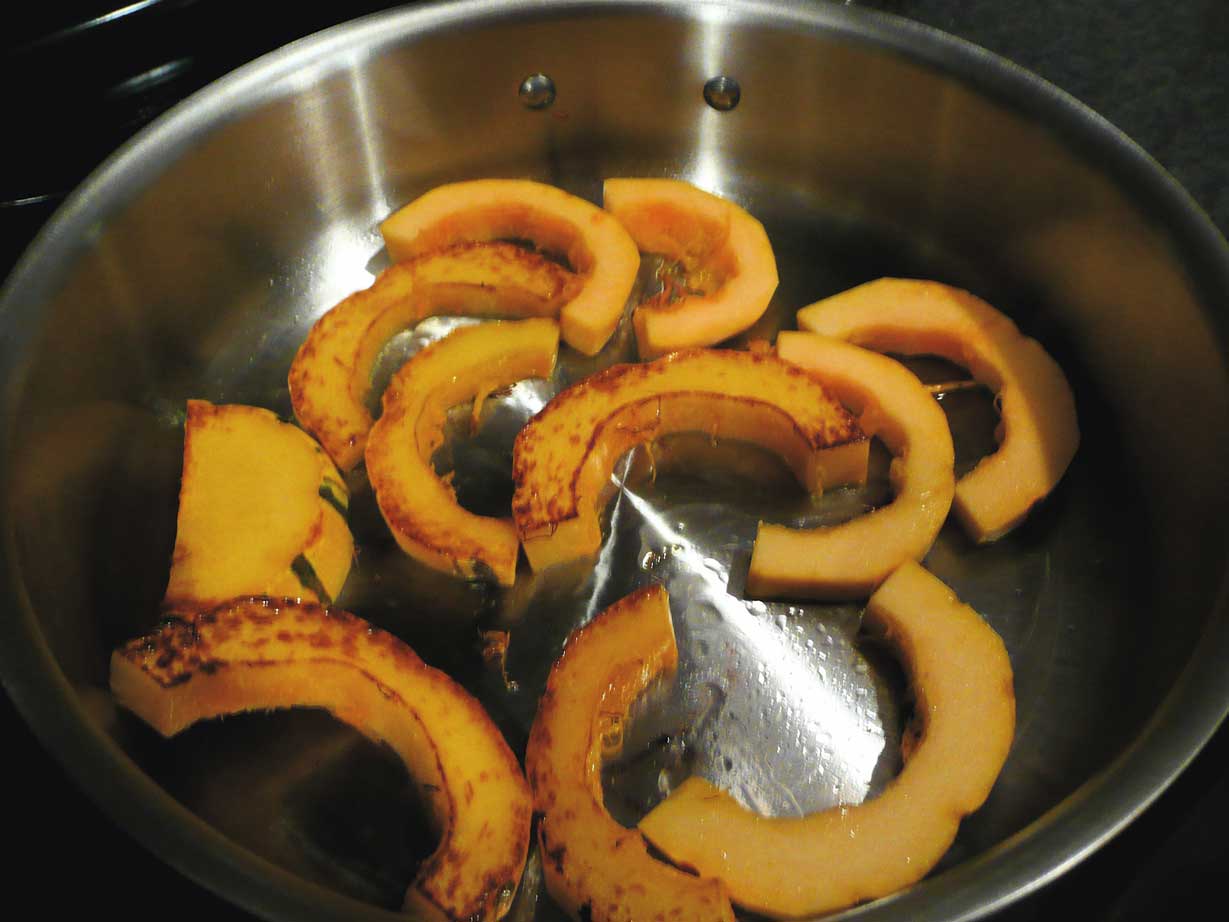
Heat 1 Tbs. of the oil in a 10-inch skillet over medium-high heat.  Add half the squash in a single layer and cook without moving until the slices begin to brown, about 2 minutes.  Flip and cook until the second side begins to brown, 1 to 2 minutes.  Transfer to a 9×13 inch baking dish. Sprinkle with 2 Tbs. of the sherry, 1/2 tsp salt, and a few grinds of pepper.
Heat the remaining 1 Tbs. olive oil and the butter in the skillet over medium heat.  Add the shallots and a pinch of salt and cook, stirring frequently, until the shallots turn deep golden brown on the edges, 3-5 minutes.  Take the pan off the heat and immediately add the sage and the remaining 2 Tbs. sherry, scraping up the browned bits on the bottom of pan.  Scatter the shallots over the squash.
Cover the pan with foil and bake until the squash is tender when pierced with a fork, 25-30 minutes.  Season to taste with salt and pepper.

Results:
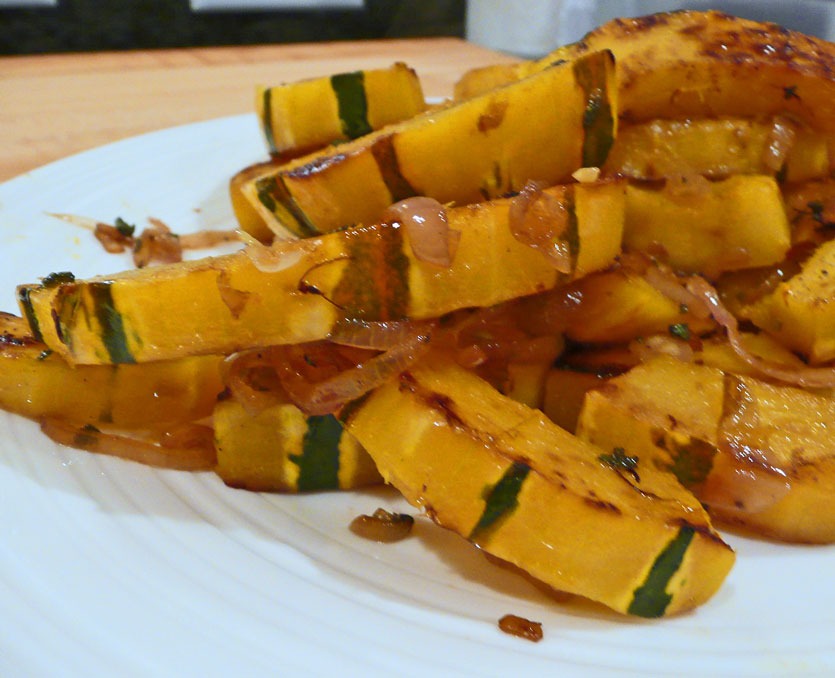
The squash tasted excellent – the caramelized shallots were sweet, and the sherry gave a contrasting nutty flavor.  As you can see, it looked very beautiful and interesting too!  Though I said I would follow the instructions meticulously, I did use Amontillado sherry rather than the suggested Fino – I’m not sure what difference this made, but fino is lighter in both color and flavor.  I should have put the squash in the oven a bit longer – closer to 30 minutes than 25 – so that it melted a bit more in my mouth; with that change I would definitely make this again.  Delicata squash has a slightly less sweet and slightly more vegetal flavor than butternut – very close to yellow-fleshed acorn squash.  I bet that this recipe would work well with either of those two types as well.
Delicata squash recipe

Sugar High Friday

Well, it is a bit past Friday, of course, but I have just been posted (2nd from the bottom) on the blog lineup for last week’s Sugar High Friday “Spice” event. You can scroll through the many delicious offerings on Anita’s site, Dessert First, or just check out my creation at The Fresh Dish. Have a very sweet Tuesday – and don’t forget to get to the polls today!

A New Stew for the Repertoire

steamy-pot1

I’m really not sure how I feel about the final picture I took to illustrate the delicious stew I made this weekend. The one above comes from about halfway through the process.  In general, it is hard to photograph an enticing picture of stew, since it is typically so brown and lumpy. Besides, what really makes stew wonderful is not the look of it but the rich and hearty aromas as they fill your house, the feel of the steam rising up from the bowl, and the warmth it generates as you swallow. So…I am saving the “results” picture for the end of the post, when you’ll (hopefully) be sufficiently hooked and convinced into making this stew yourself.

Though not my first stew of the fall, this is my first stew ever made with pork. I was a bit skeptical at first, but all of my willing guinea pigs agreed that this stew tasted like beef but without being as heavy and overly filling. The dumplings were another welcome addition, replacing large chunks of potatoes with a light and fluffy topping. I whole-heartedly recommend this to you for a Sunday dinner or even a weeknight meal, though the marinating step does require a bit more prep time than the usual slow cooker recipe.

This is not my first post extolling the virtues of the slow cooker, either. To recap: slow cookers are excellent because you can do the prep work ahead of time and all of the cooking takes place when you are busy doing other things (like working, running errands, or watching an entire James Bond marathon on the USA Network). The quality of the slow cooker’s results are directly related to the caliber of ingredients you use (i.e. no Campbell’s soup allowed), but a little fresh vegetable chopping or meat browning in the morning can make your evening homecoming heavenly. They are also very forgiving machines – if you have a good one, and fill the stoneware to the recommended capacity, you can really leave them on quite a bit longer than the recipe requires without much negative impact on the dish.

For this specific recipe, here is the schedule I recommend, based on whether you’re cooking for a busy weekday or a leisurely Sunday:

Weekday: The night before you want to serve the stew, prepare the marinade and put in the pork. Chop the onions, carrots and celery and store them together in a plastic bag or a container in your fridge. Refrigerate all overnight. The next morning, brown the meat and cook the veggies (approx. 20-25 minutes overall), put everything in the slow cooker and set it on low for the rest of the day. You could also blend the wet ingredients for the dumplings and store it in a jar in your fridge.

Weekend: Wake up late on Sunday. Eat a danish. Marinate the pork for an hour at room temperature while you chop all the vegetables. When you get around to it, brown the pork and veggies as directed and start the slow cooker on High for 4-5 hours.

mise1

Pork Stew with Sage and Onion Dumplings, adapted from The 150 Best Slow Cooker Recipes by Judith Finlayson

1 1/2 c. dry red wine
4 cloves garlic, minced
1 tsp. dried thyme leaves
1/2 tsp. cracked black peppercorns
2 lbs. boneless pork shoulder cut into 2 inch cubes
(whoops – mine were 1 inch cubes…If I had done 2 inch cubes I might have been out of the kitchen faster…)
1 Tbs. vegetable oil
2 onions, finely chopped
3 carrots, peeled and cut into 1/2 inch cubes
3 stalks celery, peeled and cut into 1/2 inch cubes
2 Tbs. all purpose flour
1 Tbs. tomato paste
1 cup chicken broth
1 tsp. salt
1 bay leaf
2 cups of thawed frozen peas (I omitted the peas due to my husband’s allergy to all things green, but I think it would have brought a bit of brightness to the finished stew)

Raw Dumplings

Dumplings:
1 1/2 c. all purpose flour
1 Tbs. baking powder
1 tsp. salt
1/2 c. milk
1 egg
6 green onions, white part only, roughly chopped
6 fresh sage leaves or 1/2 tsp. dried sage

Mix the red wine, thyme, garlic and cracked black pepper in a large mixing bowl. Add the cubed pork shoulder. Pork shoulder, if you haven’t seen it before, is usually packaged in stretchy netting before being shrink-wrapped. It is easy to work with but is quite fatty. I recommend trimming the excess fat off the meat before adding the pork cubes to the marinade. Let pork marinate for at least 1 hour at room temperature or up to 12 hours in the fridge.

Browned meat for pork stew

Remove the pork from the marinade and pat the meat dry with paper towels, reserving the wine mixture. Heat the oil in a large skillet over medium-high heat, then brown the pork cubes on all sides, working in batches to ensure the meat is not crowded in the pan. Once browned, move the cubes to the slow cooker insert.

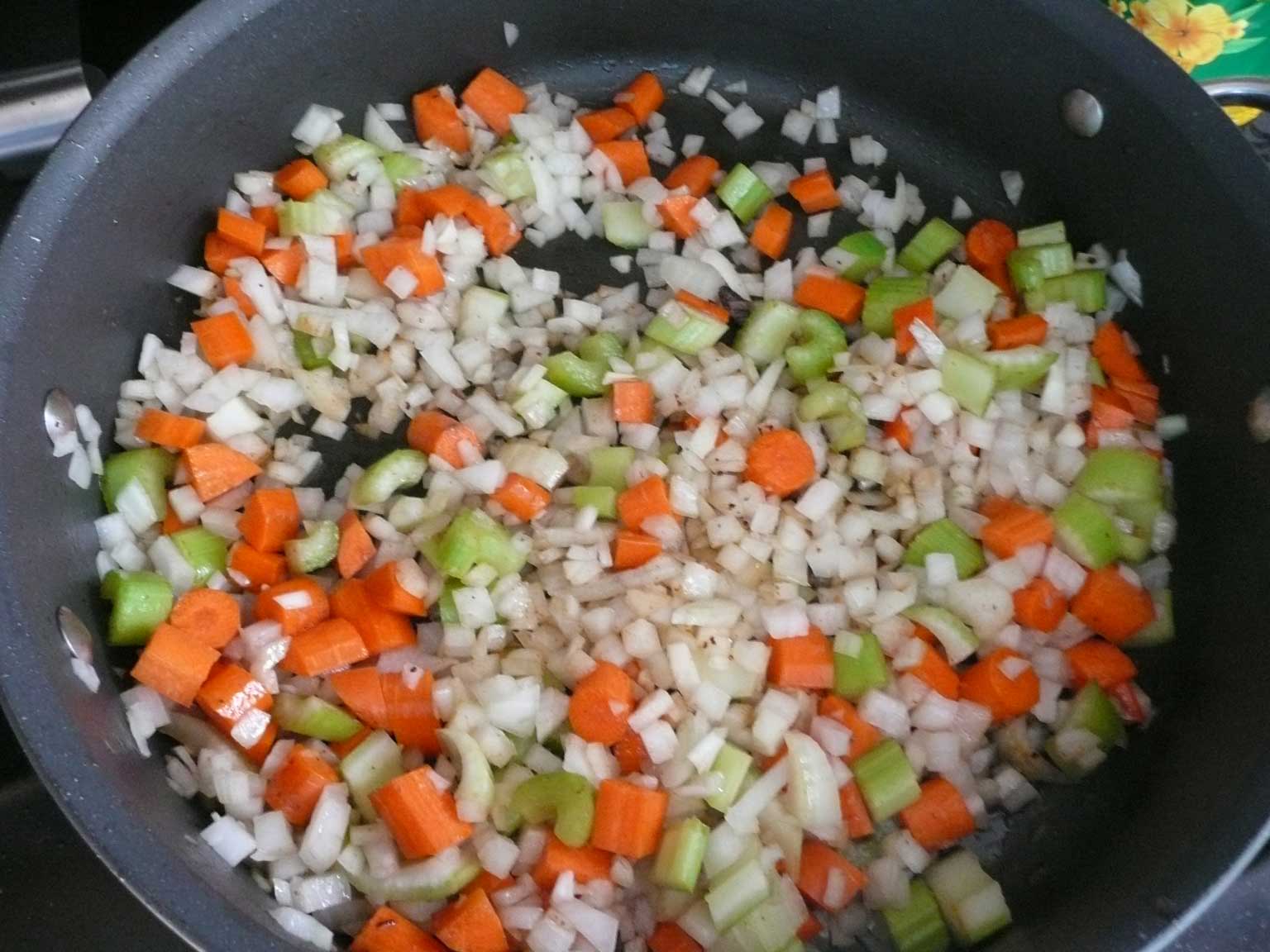
mirepoix1

In the same pan you used to brown the pork, place the onion, carrots and

celery. Stir to release some of the brown bits of pork on the surface of the pan, then cover and cook over medium-low heat for 8 minutes or until vegetables have begun to soften. Add the flour and stir to coat. Cook 1 minute, then stir in the tomato paste. Pour in the chicken broth, reserved wine marinade and salt – cook, stirring occasionally until the mixture thickens slightly, about 2-3 minutes. Pour the liquid and veggies over the meat in the slow cooker insert; tuck the bay leaf into the liquid.

Cook stew for 8-10 hours on low or 4-5 hours on high. Just before your time is up, start to make the dumplings. In a large bowl, mix the flour, baking powder and salt. In a blender or food processor, blend the milk, egg, green onions, and sage until very smooth.

When the slow cooker time is up, stir in the green peas if using. Turn the dial to High. Mix the wet ingredients for the dumplings into the bowl with the dry ingredients. Stir to blend. The batter will be very light and airy. Drop it in large spoonfuls onto the surface of the stew, leaving over an inch between the dumplings so they don’t meld into one big dumpling like mine did (see above)… Cover the slow cooker and cook on high undisturbed (don’t lift the lid!) for another 30 to 40 minutes or until a toothpick inserted into the dumpling comes out clean. Serve with bread or rolls for dipping and a nice simple salad for a great fall meal.

Without further ado…here’s my final picture. Let me know what you think: does it look appetizing at all? Are you glad I left it to the end? Would you prefer it at the start of the post? Do you want it taken out immediately? Let me know!

Pork stew with dumplings

Easy Cheese Danish – Ina said so.

I have recently joined the online community of “Barefoot Bloggers.” No, this is not a group of people who spend all day web-surfing without shoes on, nor is it a bunch of crazies who type all their blog posts with their bare feet.  It refers to Ina Garten, aka The Barefoot Contessa, and a group of people who like to blog their ways through her delicious cookbooks.  The rules are simple – the first and fifteenth of every month, a new challenge is posted – a recipe selected from one of Ina’s books or her website.  The whole group then works on that same recipe, either making it “as is” or playing with it a bit to their own taste.  Every second and fourth Thursday of the month, participants post their creations on their respective blogs.  It’s a very fun way to work with a recipe, since you can see how your result compares with your peers’.

Today is the first of the month, so I’m going to participate for the first time on November 13th with Kelly’s pick: herb roasted onions.  If you clicked that link, you probably noticed that her site and mine look embarrassingly similar.  When I saw that, I decided to accelerate my project to learn HTML code so I can alter my own design.  I started by taking a schoolchildren’s DVD on HTML out of the library – I’m going slow and steady here!

So, just to get into the mood of Barefoot Blogging, and warm up before the big game, I decided to catch up with the group and post about the Easy Cheese Danish that Val had selected for a bonus recipe in October.  They looked delicious and, well, easy.  I wanted to stick close to Ina’s directions this time around (like I said, slow and steady!) so I made only a couple of small substitutions.

Easy Cheese Danish
8 oz. cream cheese at room temperature
1/3 cup sugar {this is the only place I really deviated from the recipe – I used 1/4 c. packed brown sugar instead of 1/3 c. white – let’s see what happens!}
2 extra large egg yolks, at room temperature
2 Tbs. ricotta cheese
1 tsp. pure vanilla extract
1/4 tsp. kosher salt
1/2 – 1 Tbs. grated lemon zest (2 lemons) {I got this much lemon zest from 1 lemon, and I found it to be almost too lemony for my taste}
2 sheets (1 box) frozen puff pastry, defrosted
1 egg beaten with 1 tablespoon water, for egg wash

Preheat oven to 400 degrees. Line a sheet pan with parchment paper.

Place the cream cheese and sugar in the bowl of an electric mixer fitted with paddle attachment and cream together on low speed until smooth.  With the mixer still on low, add the egg yolks, ricotta, vanilla, salt, and lemon zest and mix until just combined.  Don’t whip!

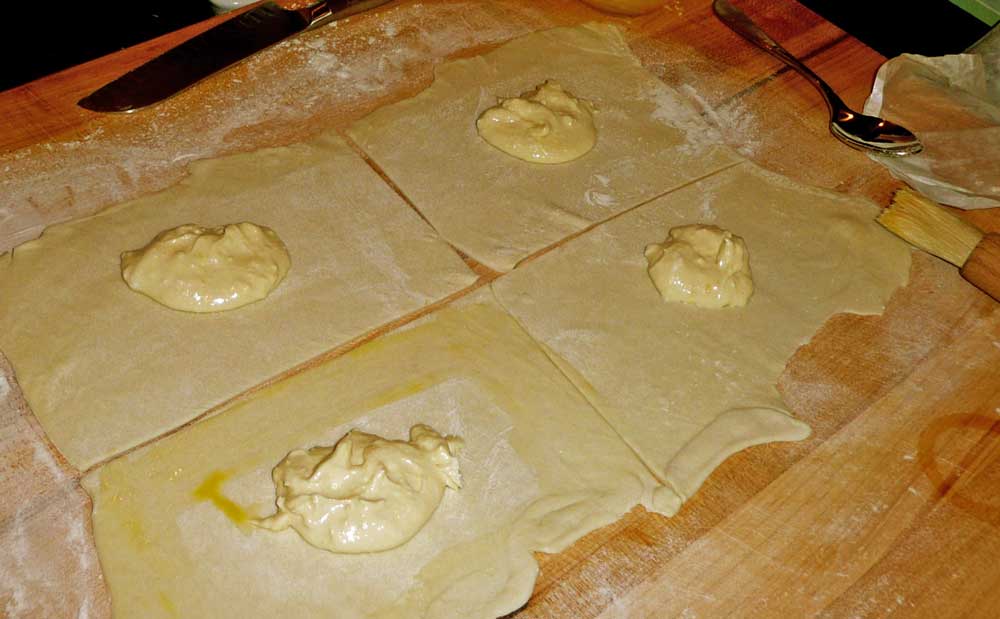
Unfold one sheet of pastry onto a lightly floured board and roll it slightly with a floured rolling pin until it’s a 10×10 inch square.  Cut the sheet into quarters.  Place a heaping tablespoon of cheese filling into the middle of each of the 4 squares.  Brush the border of each pastry with egg wash and fold two opposite corners to the center, brushing and overlapping the corners of each pastry so they firmly stick together.  Bursh the top of the pastries with egg wash.  Place the pastries on the prepared sheet pan.  Repeat with the second sheet of pastry, then refrigerate danishes for 15 minutes.

Bake the puff pastries for about 20 minutes, rotating the pan once during baking, until puffed and brown.  Serve warm.  Makes 8 danish.

Results:  These came out looking amazing (RJ took one right off the baking sheet and popped it in his mouth without asking what was in it – that’s a first!).  I thought they were a wee bit too lemony, and that I should have spread the cheese filling from stem to stern rather than dropping a rounded tablespoon of filling in the center of the pastry square.  All in all, though, very delicious.  And I think that Tara’s pumpkin variation sounds incredible – check it out!  Yes, it is going to be another lovely Sunday morning…