
Though I have already leaked my favorite cookie recipe, this is a very VERY close second place. In addition to being highly flavorful in a subtle ‘what is that?’ sort of way, the other fabulous thing about these cookies is that they are modifyable. In fact, last night was the first time I have made them according to the directions! I have, in various iterations, left out the pecans because of a nut allergy, substituted cherries and/or orange-flavored Craisins for the dried cranberries, swapped in maple syrup for the corn syrup, and, almost always, I have ignored the call for cake flour and just used 1/4 c. regular all-purpose with 1 1/2 tsp. of cornstarch. Replacements, swap-outs and eliminations of any of the solid additives (dried fruit, chocolate, coconut, pecans) are fine so long as you maintain the 2 cup total. And I wouldn’t mess with the oats, since they are the structure and the texture of the cookie.
I should note that as cookies go, these involve fairly lengthy prep: toast the coconut, toast the pecans, chop the pecans, mix the all-purpose flour and the cake flour separately, form the dough into two-inch disks blah, blah, blah. There’s even a note suggesting that the cookies are better if you weigh all the ingredients rather than measuring with a cup. However, I can tell you that I have assembled these many times with far less attention to detail then I did last night and I haven’t yet been struck by lightning.
As I said, I’ve been making minor changes to these cookies each time I bake them based on people’s dietary restrictions and taste preferences. Honestly, though, this recipe is pretty incredible as written. The coconut is hardly noticeable unless you are sniffing for it, but it adds a distinct type of sweetness that isn’t just hum-drum brown sugar. The nuts are not overpowering, and they add a nice savory element to the bite. The white chocolate seems to be a natural continuation of the cookie batter, not a glaring sore thumb, and the cranberries are a far superior (and more universally appealling, I’ve noticed) alternative to raisins.
I made these this week for a cookie swap at work – if any of my friends from the museum are checking in, please let me know what you think of the results in the comments section!
Jumbo Cranberry-Oatmeal Jumbles, from Fine Cooking magazine, November 2005, Issue 74.
(makes 16-18 big, er, jumbo cookies)
 6 oz. (3/4 c.) unsalted butter, softened at room temperature
1/2 c. granulated sugar
1/2 c. packed light brown sugar
1 large egg, at room temperature
1 Tbs. light corn syrup
1 tsp. pure vanilla extract
6-3/4 oz. (1-1/2 c.) unbleached all-purpose flour
1 oz. (1/4 c.) cake flour
1 tsp. baking soda
1/2 tsp. table salt
1/2 c. sweetened dried cranberries
1/2 c. rolled oats (old-fashioned, not quick-cooking)
1/2 c. pecan pieces (or coarsely chopped pecan halves), lightly toasted
1/2 c. sweetened coconut flakes, lightly toasted
3 1/2 oz. good-quality white chocolate, coarsely chopped
Position two racks near the center of the oven and heat the oven to 325°F. Line three baking sheets with parchment.
 In the bowl of a stand mixer fitted with the paddle attachment, beat the butter and both sugars at medium speed until light and fluffy, about 2 minutes. Scrape the bowl. Add the egg, corn syrup, and vanilla; beat for 1 minute on medium speed. Mix in half the all-purpose flour on low speed until thoroughly combined, 30 seconds to 1 minute. Scrape the bowl. Briefly mix in the remaining half of the all-purpose flour. Sprinkle the cake flour, baking soda, and salt into the bowl and beat on low speed until well blended, 30 seconds to 1 minute. With a wooden spoon or a rubber spatula, stir in the cranberries, oats, pecans, coconut, and white chocolate.

Using your fingertips, shape 2-oz. pieces of dough (about a scant 1/4 cup) into 2-inch-diameter disks that are 1/2 inch thick. Space them at least 2 inches apart on the parchment-lined sheets. Bake until the cookies’ edges and bottoms are golden and the centers feel dry on the surface but still soft inside, 15 to 16 minutes. When baking two pans of cookies at once, switch the position of the pans after 8 minutes for even browning. Let the cookies cool on the baking sheets for at least 1 minute before transferring them to a wire rack to cool completely. These cookies will keep for three or four days at room temperature or for several weeks in the freezer.

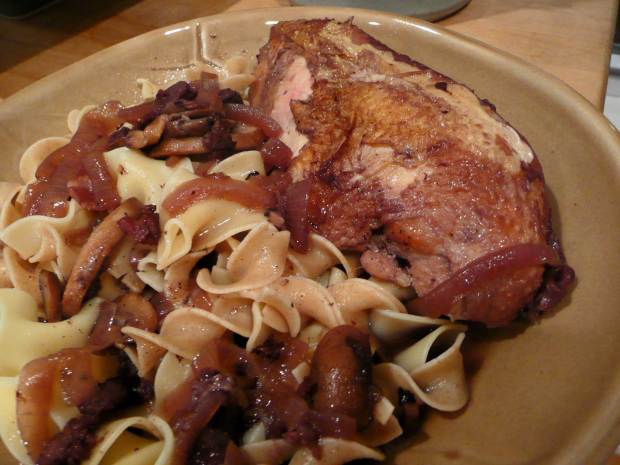


 Heat the olive oil in a large Dutch oven. Add the bacon and cook over medium heat for 8 to 10 minutes, until lightly browned. Remove the bacon to a plate with a slotted spoon.
 Mash 1 tablespoon of butter and the flour together and stir into the stew. Add the frozen onions. In a medium saute pan, add the remaining 1 tablespoon of butter and cook the mushrooms over medium-low heat for 5 to 10 minutes, until browned. Add to the stew. Bring the stew to a simmer and cook for another 10 minutes. Season to taste. Serve hot.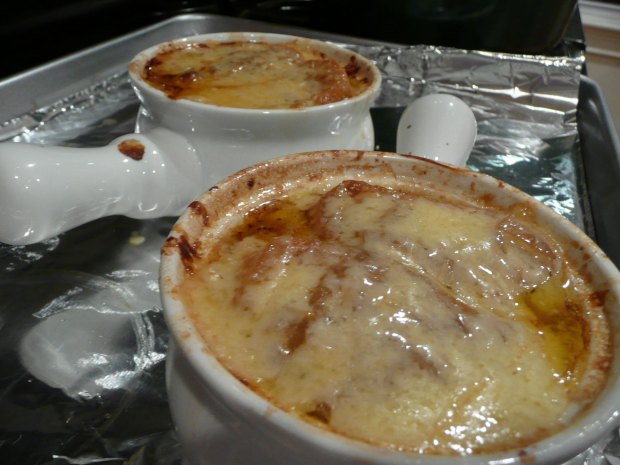
 Preheat your oven to 325 degrees F. In one pot, keep the stock/broth/bouillon hot. In another, cook the onions in the butter and oil over medium-low heat, covered, for 15 minutes. Uncover, raise heat to moderate, and stir in the salt and sugar. Cook for 30 to 40 minutes stirring frequently, until the onions have turned an even, deep golden brown. Sprinkle in the flour and stir for 3 minutes.
 Off heat, blend in the boiling liquid. Add the wine, and season to taste. Simmer partially covered for 30 to 40 minutes or more, skimming occasionally. Correct seasoning. Set aside uncovered until ready to serve.
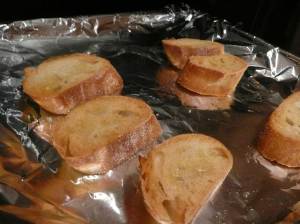 Halfway through the baking, each side may be basted with a teaspoon of olive oil or beef drippings. After baking, each piece may be rubbed with cut garlic.
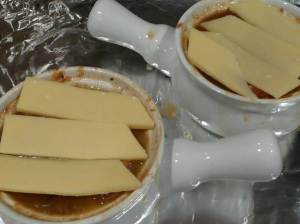 Float the rounds of toast on top of the soup, and spread the grated cheese over it [I had my first bowl made this way, but found that most of the cheese fell into the soup. My second bowl, I cut thick slices of gruyere and lay them over the toast round, which gave the top of the soup a nice thick cheese topping.] Broil for 3-7 minutes until the cheese is nice and bubbly and beginning to brown around the edges.
 If you have any fancy flavored salts, this is a good time to use them as well – I have a “Sel de Merlot” from France which is delicious in this recipe. Set butter aside.
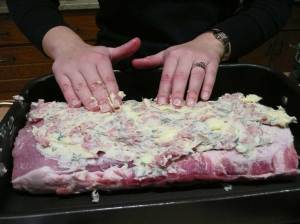 If you think you made more butter than your pork loin will require, scoop butter out of the small bowl with a spoon in smaller batches so that you don’t contaminate the unused butter. In my case, having such a monstrous loin, I just slathered the whole stick on there with my hands. Definitely make sure you spread the butter out evenly and that the goodies are distributed across the top of the meat.
 From My Table...to Yours