Spring-y Saffron Chicken and Snap Peas

I am aware that this post is coming late: spring has long since sprung.  Morels, fava beans, and ramps – the heralds of the season in New England – have populated and then disappeared from the market shelves, making room for the first husks of sweet corn and mounds of heirloom tomatoes.  Nevertheless, I decided last night to peruse the “Spring” chapter of one of my favorite cookbooks with the aim of giving May a proper (though belated) send-off.

Suzanne Goin’s Sunday Suppers at Lucques is a truly wonderful volume for any cook who loves to entertain.  The recipes are elegant and intensely flavorful, though never overly complicated.  Their simplicity is juxtaposed brilliantly with their originality – I often ask myself, “why hasn’t anyone thought of that before?”  As an example, the meal I made last night involved thinly slicing sugar snap peas on the bias and sauteeing them quickly with onions and thyme, finished with saffron butter and lemon juice.  Surely, one need not prepare the snap peas this way to enjoy the delicious flavor combination, but I loved the way the peas separated from the pod, creating a varied texture and a far more interesting visual on the plate than the standard whole pod.

Another lovely feature of this cookbook is that it is organized around full meals.  For each season, Goin provides eight 4-course menus, including dessert.  I have had great luck cooking her recipes — her instructions are very clear and concise, and she always notes when some aspect of the meal can be done ahead.  Last night, I made just one course although it had three components: Saffron Chicken with Parmesan Pudding, Spring Onions, and Sugar Snap Peas.  RJ and I raved about the layered flavors of the chicken breasts, and I could not get enough of the green vegetables.  After an initially lukewarm reaction to the texture of the parmesan pudding, both of us came around to appreciating its subtlety when paired with the zesty chicken.  Only two things would have improved this meal: first, we should have listened to Suzanne Goin and used skin-on chicken breasts.  We missed the crispy goodness!  Second, in making this again I will definitely whip up a quick pan sauce to accompany the protein – why waste all those rich drippings?

Saffron Chicken, Spring Onions, and Sugar Snap Peas
Serves 6

1/2 tsp. saffron threads
3 Tbs. unsalted butter, softened
5 Tbs. extra-virgin olive oil, separated
6 boneless chicken breasts, about 5 oz. each, skin on!
1 Tbs. thyme leaves, separated
2 Tbs. sliced flat-leaf parsley
1 lemon, zested
3/4 lb. sugar snap peas, sliced on the diagonal into 1/4 inch pieces
1 1/2 c. sliced spring onions plus 1/2 c. sliced spring onion tops
4 oz. pea shoots

Toast the saffron in a small pan over medium heat until it just dries and becomes brittle. Pound the saffron to a fine powder in a mortar. Dab a tablespoon of the softened butter into the saffron powder, using the butter to scoop up about half the powder. Set aside.

Stir 4 tablespoons olive oil into the mortar, scraping with a rubber spatula to incorporate all of the saffron powder. Mix with 2 teaspoons of the thyme leaves, all of the parsley, and the lemon zest. Pour this into a large ziplock bag with the chicken breasts, coating the chicken well. Marinate in the refrigerator at least 4 hours, preferably overnight.

Heat a large saute pan over high heat for 2 minutes. Season the chicken with salt and pepper on both sides. Swirl in 1 tablespoon olive oil and wait a minute. Place the chicken, skin side down, in the pan (you might need to cook the chicken in batches). Cook for 3-4 minutes, until the skin is crispy and golden brown. Turn the breasts over, reduce the heat to medium-low, and cook them a few more minutes, until just cooked through and springy to the touch. Transfer the chicken to a resting rack.

Return the pan to the stove over medium heat for a minute. Add the remaining 2 tablespoons butter, and when it foams, add the sliced spring onions, sugar snap peas, 1/2 teaspoon salt, a pinch of pepper and the remaining teaspoon of thyme. Cook over medium heat 2-3 minutes stirring, until the onions are translucent. Add the saffron butter and 1 tablespoon water. Swirl the pan, and when the liquid comes to a simmer, toss in the pea shoots and onion tops. Immediately remove the pan from the heat and squeeze a little lemon juice over the vegetables. Taste for seasoning.

Arrange the chicken on a large warm platter and spoon the vegetables over it. Serve with the hot parmesan pudding.

Parmesan Pudding
(obviously this part of the meal is not gluten free)

3 Tbs. unsalted butter
1/4 c. plus 2 Tbs. all-purpose flour
1 3/4 c. whole milk
2/3 c. heavy cream
1 extra-large egg
1 extra-large egg yolk
1 1/4 c. grated Parmigiano-Reggiano
Kosher salt

Preheat the oven to 350 degrees F.  Heat a medium pot over medium heat for 1 minute.  Add the butter; when it foams, whisk in the flour, 1 Tbs. at a time, and cook for about 5 minutes, being careful not to let the flour brown.  Slowly pour in the milk and cream, whisking constantly to incorporate it.  The butter and flour will seize up and get pasty at first.  Continue whisking vigorously as you add the liquid, and the mixture will become smooth.  Cook a few more minutes, until warm to the touch.  Remove the pan from the heat.

Whisk the egg and egg yolk together in a small bowl.  Slowly drizzle the eggs into the cream mixture, whisking continuously until combined.  Stir in the cheese, and season with a heaping 1/2 teaspoon of salt.  Pour the mixture into a 8×6 inch (or equivalent) baking dish, and cover tightly with foil. [I used individual ramekins instead, and cut the cooking time to 40-45 minutes which seemed to do the trick!]  Place the baking dish in a roasting pan, and add hot water to the pan until it comes halfway up the outside of the custard dish.  Place the pan in the oven and bake about 1 hour, until the pudding is just set.

(You can make and bake the pudding ahead of time and refrigerate it, covered.  Bring it to room temperature about an hour before serving, and rewarm it in a 400 degree F oven, 15-20 minutes, uncovered, until it’s hot and begins to brown slightly around the edges.)

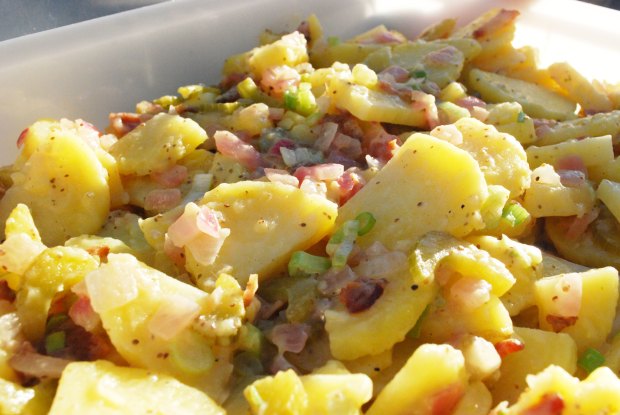
German Potato Salad

german potato salad

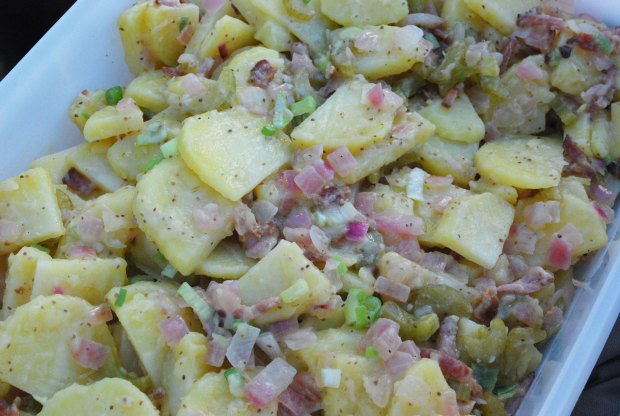
One of the many components of putting together RJ’s now-famous birthday pig roast was developing a cohesive group of side dishes to complement the main course.  We were looking for southern-inspired sides — traditional but not boring, simple but with great flavor.  My contribution was a jalapeno cornbread; my mom brought her famous coleslaw; and RJ’s aunt Jane made a delicious slow-cooked sausage appetizer that satisfied the hungry folks drooling over the rotating pig.  One of the stars of the show in my mind, however, was my mother-in-law’s potato salad.

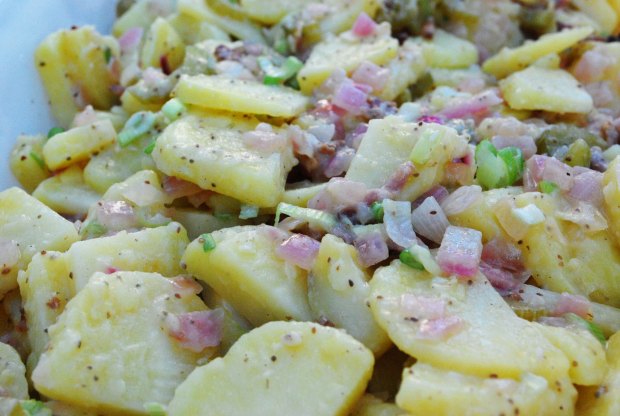
This potato salad has made frequent appearances at large family gatherings since it is easily multiplied and contains no mayonnaise that will cause it to spoil.  Delicious served warm, cool or room temperature, German potato salad is a crowd pleaser to be sure.  The vinegary zing contrasts with and complements the sugar and this foundational pairing of sweet and sour reverberates through the layers of flavor: savory bacon with sharp mustard, creamy egg with pickles or raw onion.  The result is a balanced composition perfect for summer picnics or winter feasts.

While this is not my mother-in-law’s recipe, the results tasted very similar.  Hers has an oil vinaigrette base and less of the optional add-ons.  Play with the recipe to your heart’s content — you won’t be disappointed.

german-potato-salad

German Potato Salad, adapted from Gourmet magazine, January 1990

(serves 8 )

3 lb. large boiling potatoes (about 6), such as Yukon gold
6 slices of lean bacon
1 c. finely chopped onion
1 c. thinly sliced celery
1 Tbs. sugar
2 Tbs. all-purpose flour
1 tsp. celery seeds
1 Tbs. Dijon-style mustard
6 Tbs. cider or champagne vinegar
1/2 c. thinly sliced scallion greens
3 hard-boiled large eggs, chopped (optional)
1/3 c. chopped dill pickles (optional)

Bring a large pot of salted water to a boil.  Drop the whole potatoes into the pot and cook for 18 minutes or just until cooked through (you want them to still be firm but not completely crunchy).  Meanwhile, in a large skillet cook the bacon strips over moderate heat until it is crisp and transfer it to paper towels to drain. Crumble or chop the bacon strips into pieces.

Pour off all but 2 tablespoons of the bacon fat; to the skillet add the onion and the celery, and cook the mixture over moderately low heat, stirring, until the onion is softened. Add the sugar, the flour, and the celery seeds, and cook the mixture, stirring, for 30 seconds. Stir in the mustard, the vinegar, and 1/2 cup water, bring the mixture to a boil, stirring, and simmer until it is thickened (this took me about 40 seconds but make take up to 2 minutes). Season the dressing with salt and pepper, pour it over the potatoes, and stir in the scallion greens, eggs, and/or pickles.  This may be served warm, room temp or cold.

german-potato-salad

Doctored-up Ramen

Ramen Noodles

A cookbook author and an editor/correspondent for Gourmet, Nina Simonds has shared her philosophy about Asian cooking and ingredients widely.  One of her methods for spreading the word is through her “Dinner Doctor” character, who goes around solving common challenges to making delicious, healthy dinners.  She can be seen on Oprah and her own website breaking down people’s extensive excuses – I am too tired at the end of the day, I don’t know how, it’s too expensive to buy groceries, I have to eat takeout to get to my fortune cookie, etc…

My second foray into Nina’s book, Spices of Life, is a healthful twist on doctored-up ramen.  Ramen noodles, the staple of college dorm rooms everywhere, answer almost all of the above excuses (you’ll still have to get your own fortune cookie – sorry – but Confucious says necessity is the mother of invention).  Ramen are super easy and low effort (add water and stir) and cost about 20 cents a package.  Granted, this dinner-doctored version is a bit more high maintenance, but it is also far FAR better tasting.  Toss out your “flavor pak” and check this recipe out:
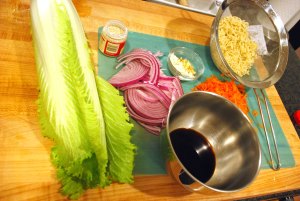
Stir-Fried Ramen Noodles with Vegetables, from Nina Simonds’ Spices of Life

(serves 6)

ramen-mise3/4 lb. fine dried Japanese ramen, Chinese egg noodles or angel hair pasta
1/2 small head Chinese (Napa) cabbage (about 3/4 pound)
2 Tbs. virgin olive oil
2 Tbs. minced fresh ginger
1 tsp. dried chile flakes, or to taste
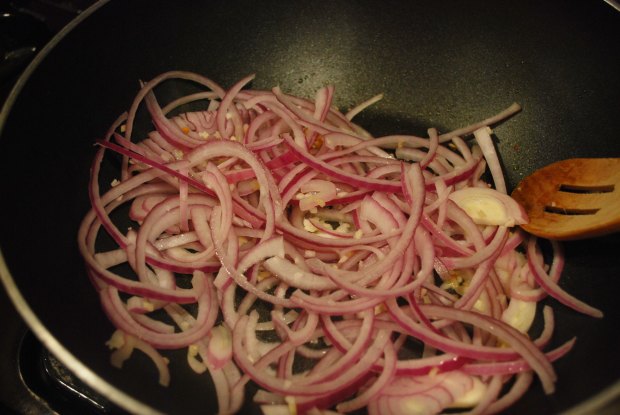
2 medium red onions, peeled and cut into thin slices (about 2 1/2 cups)
2 carrots, peeled, ends trimmed and grated
2 Tbs. rice wine or sake

Noodle Sauce (mixed together):
5 Tbs. soy sauce
2 Tbs. mirin (or 2 Tbs. rice wine or sake plus 1 1/2 Tbs. sugar)
1 1/2 Tbs. Worcestershire sauce
3 Tbs. soy sauce

2 Tbs. toasted sesame seeds

Bring 3 quarts of water to a boil in a large pot. Drop the noodles into the water and stir to prevent them from sticking together. Bring the water again to a boil and cook 4 1/2 to 5 minutes, or until the noodles are just cooked. (Since the cooking time varies with the type of noodles, refer to the package for the recommended time.) Drain the noodles in a colander and rinse under warm running water. Drain again and set aside.

ramen-onions

Cut the cabbage leaves from the stem. Trim the leafy tip ends and discard. Rinse the leaves thoroughly and drain. Cut them into julienne strips about 1/4 inch wide, separating the stem sections from the leafy sections.

ramen-cabbage

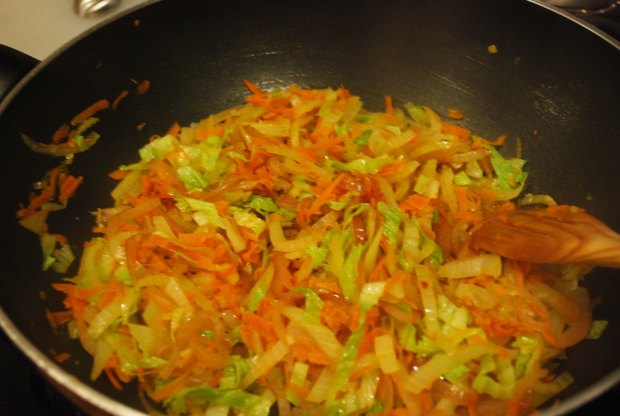
Heat a wok or a heavy skillet, pour in the oil, and heat over medium-high heat until hot. Add the ginger, garlic, chile flakes, and onions, and stir-fry for about a minute. Cover and cook for several minutes, until the onions are soft. Add the cabbage stem shreds, carrots, and rice wine. Stir-fry lightly, cover, and cook for about 1 1/2 minutes, until almost tender. Add the leafy cabbage shreds, toss, cover, and cook for a minute or two. Pour in the Noodle Sauce, bring to a boil, and add the noodles and the sesame seeds. Toss lightly to coat the noodles and vegetables and spoon onto a serving platter. Serve immediately.

Fancy Ramen Noodles

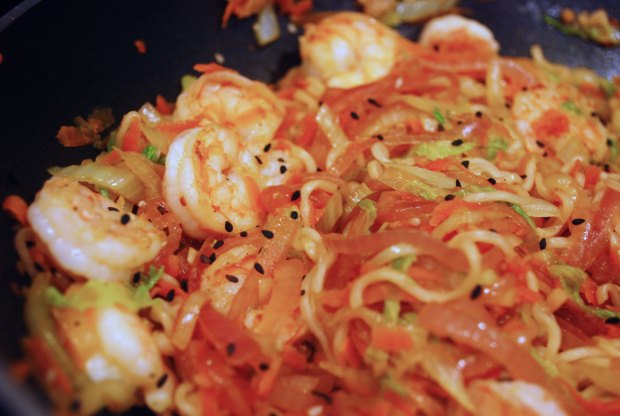
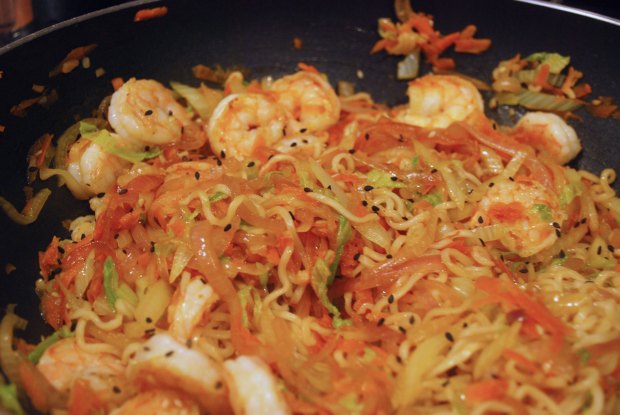
(As you can see from the pictures, I sauteed some shrimp to mix in, but as-is it is a vegetarian main course.)

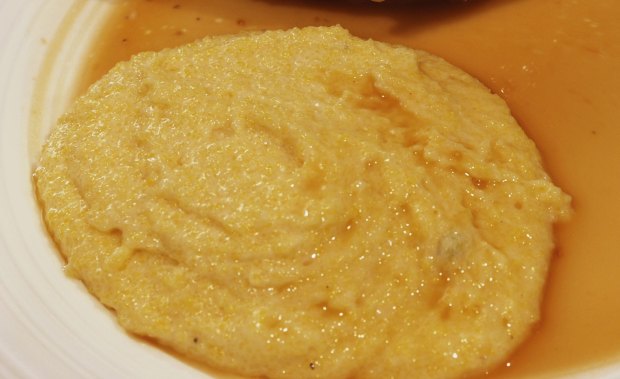
Polenta of the gods

Polenta

To spare you another dissertation on why I love Patricia Wells’ The Paris Cookbook, I will instead refer you to my first post on the book, and get right to the heart of the matter.  This polenta is sinfully, sinfully delicious.  Why then do I call it “polenta of the gods” rather than “Satan’s cornmeal”?  Because this is a dish I would think is a staple on heaven’s divine menu.  It is laden with rich cheeses and luxuriously melts in your mouth.  The reduced chicken stock, provided you use real, homemade, quality stuff, is the perfect flourish — adding both depth of flavor and visual interest to a side dish that often goes overlooked.

Easy Polenta RJ and I served this with a simple pan-roasted chicken breast and these caramelized shallots and it was all divine.  I can see this as a special occasion side dish (too rich for every day, but quick and easy enough to do on a weeknight for guests) to accompany braised meats, or with a mix grill of sorts.  Just be warned about two things: 1) this is not a light and airy side dish – it is silky smooth but also dense with cheese and 2) use the best ingredients you can find – homemade chicken stock (or really good store-bought) and artisinal cheese such as Abbaye de Bel’loc or good Manchego since this is a simple and straightforward dish, the quality of the parts equal the quality of the whole.

Helene’s “Polenta” with Sheep’s Milk Cheese, from Patricia Wells’ The Paris Cookbook
(Yield 4 servings)

3 2/3 c. Homemade Chicken Stock, or more as needed
3/4 c. corn flour or fine-grain yellow cornmeal
7 oz. French Basque sheep’s milk cheese, freshly grated (2 1/2 cups)
8 oz. mascarpone cheese

Reduce the chicken stock: in a 6-quart saucepan, bring 2 cups of the stock to a boil over high heat. (Make sure you use a large saucepan, to prevent the stock from boiling over.) Boil until the mixture is thick and syrupy, reduced to about 1/2 cup, 10 to 12 minutes. Transfer the liquid to the top of a double boiler, set it over simmering water, cover, and keep warm.

In a large, heavy saucepan, combine the cornmeal and the remaining 1 2/3 cups chicken stock. Stir with a wooden spoon to blend. Cook the mixture over high heat, stirring, until it is thickened and leaves the side of the pan as it is stirred, about 2 minutes. Reduce the heat to low, add both cheeses, and stir to blend. Cook, stirring to melt the cheeses and thoroughly combine the mixture, about 2 minutes more. The mixture should be soft and pourable. (If it is not, thin it out with additional chicken stock.)

Pour the mixture into warmed shallow soup bowls. Drizzle with the reduced chicken stock, and serve.
Polenta plated