Best Ever Chicken Scallopine

Scallopine

It seems I am not the only one lax in my blogging duties.  Some of my favorite sites are on indefinite breaks.  Granted, I don’t have a truly good excuse, as I am not in the middle of opening my own restaurant, mourning the loss of my pet, or recovering from a difficult break-up.  I’m more in the same league with Katie of Chaos in the Kitchen, who just wants to hang out with her kids, since my reason is that I’m pouty about not having my own kitchen.  This, however, is all about to change!  Starting July 6th, my table — of “From My Table to Yours” fame — will be relocated to Beacon Hill in Boston, MA.  From those heights overlooking the historic city, the dirty river Charles, and the ivory towers of Cambridge, I hope to bring my cooking to a whole new level.  Think: exotic cheeses from Formaggio Kitchen, game meats from Savenor’s, and guess what — a Whole Foods only a couple blocks from my front door!  If I can just manage to keep my graduate student homework to a minimum, I can really get something accomplished here!

So, unlike my compatriots listed above I am not on a break from posting, I simply need another week to gather myself together and get back into the swing of things.  To tide you over, I have a great recipe to share though I do need to make a confession.  While my Cookbook Challenge was conceived with the absolute best intentions, I always suspected it might come back to bite me in the arse.  The mission was to work my way through the massive collection of cookbooks I own so that I could at least say that I had tried several recipes from each one (and thus justify their purchase).  Yet deep down I knew that I had a dark secret — I buy books faster than I can cook from them.  Since the start of the challenge at the end of April, I have added five cookbooks to my collection, or seven if you count Ratio and The Flavor Bible in the count!  No matter — I won’t let my own weakness for shiny hardcovers and glossy photographs lessen my dedication to (or enjoyment of) the Sisyphean task of the Cookbook Challenge!

Next up: Sweet Basil by David Becker.  This book is particularly close to my heart since the restaurant Sweet Basil is located in my hometown of Needham, MA and is a favorite of mine.  Inside the small establishment, corrugated tin walls flank an open kitchen from which steam clouds billow and giant white bowls of pasta emerge.  Outside, crowds gather to await their tables, each couple sharing the burden of a mysterious brown paper bag.  Those in the know, of course, are aware that the bags contain wine and beer, since part of the charm of Sweet Basil is their BYOB policy.  And as Dave Becker confesses in the book, he’s seen wine harvested during the Reagan administration sitting on one table, with Schlitz in a can holding court at the adjacent one.  It’s just that kind of place.

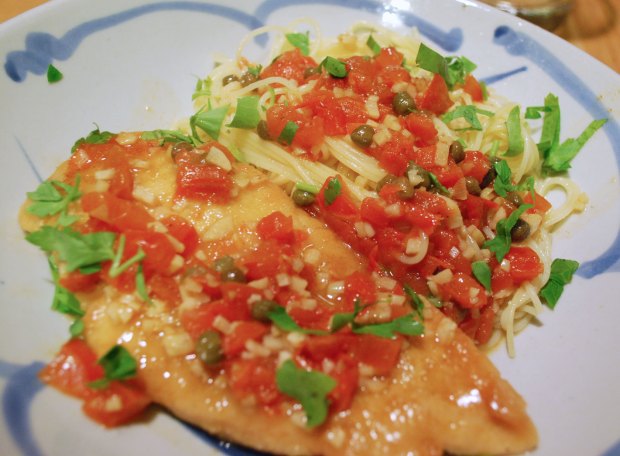
What I loved most about this first recipe is that it came out tasting just like it does at the restaurant.  The characteristic flavors of bright lemon juice, pungent garlic and, yes, sweet basil, were all present and accounted for.  Each bite came alive in my mouth – and each tastebud was singing in chorus: salt! sweet! sour! umami!  (it’s true – it’s from the parmesan cheese).  I would not call this recipe the “Best” unless it really was extremely good and the best I’ve tasted.  Please make this.  Go.  Now.  Cook!  Or if you don’t cook, get yourself over to Sweet Basil on Great Plain Ave in Needham.

Chicken Scallopini with Lemon, Capers, and Tomatoes, from Sweet Basil the Cookbook [Printable Recipe]
(Serves 4)

4 skinless, boneless chicken breast halves
All-purpose flour
Kosher salt and cracked black pepper
3 Tbs. olive oil
3 Tbs. unsalted butter
8 cloves garlic, minced (about 1/2 cup – don’t skimp too much!)
1/2 c. white wine
Juice of 2 lemons
2 c. chicken stock
2 plum tomatoes, diced (about 1 cup)
2 Tbs. salted capers, rinsed (I used the capers in brine)
1/4 c. chopped fresh parsley
1/4 c. chopped fresh basil
1/2 c. grated Parmigiano-reggiano cheese

Cooked angel hair pasta for serving
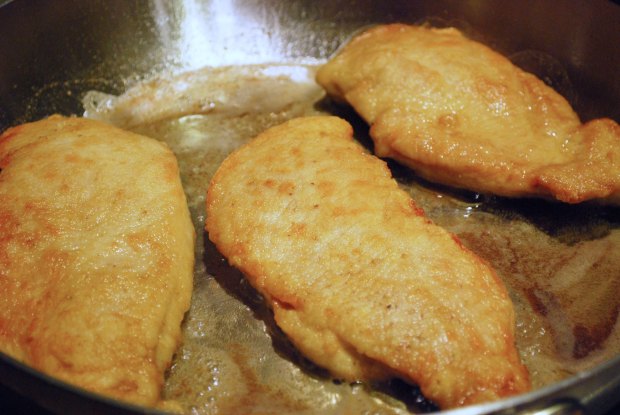
scallopine-chickenPlace the chicken breasts, two at a time, between 2 sheets of plastic wrap [or in a gallon-size Ziploc bag]. Use the smooth side of a meat mallet [or a rolling pin] to pound them to about 1/2 inch thickness. Arrange the flour in a shallow bowl. Season the chicken with a pinch each of salt and pepper, and then dredge generously with flour, coating both sides. Shake off the excess and set aside.

In a large skillet, heat the olive oil over medium-high heat. Add 1 Tbs. of the butter. When the butter melts, place the chicken in the skillet. Cook for 4-5 minutes, until golden brown on the bottom. Turn over and cook for 2 more minutes. Transfer the chicken to a plate (it is not cooked through at this point).
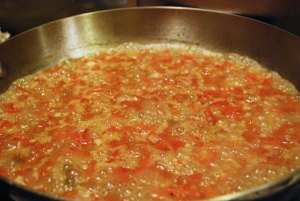
chicken scallopini sauceAdd the garlic to the pan and cook, stirring, for 30 seconds. Add the white wine and the lemon juice. Simmer, scraping up the browned bits on the bottom of the pan for a few minutes until almost all the liquid is gone. Add the chicken stock, tomatoes, and capers. Increase the heat to high, and bring the liquid to a boil. Simmer for 6 minutes, or until the liquid is decreased by about one-third.

Stir in the remaining 2 Tbs. of butter. Return the chicken to the pan and simmer for 2 minutes, or until the sauce thickens slightly and the chicken is cooked through. Season to taste with salt and pepper. Garnish with the herbs [and cheese] and serve immediately.

Fish en Papillote

Finished PapillotteAs I indicated in my last post, something naturally happens as the weather warms whereby I turn away from my many cookbooks (or in the case of this year, pack them into about 10 cardboard boxes and put them in a POD) and instead begin to develop a more spontaneous and improvisational cooking style.  Last night my sister’s plans for whole trout on the grill were thwarted by an ill-stocked fish counter, and I instead purchased two gargantuan halibut steaks (the ones cut cross-wise from the fish’s body) with a glimmer of an idea in mind.

Assembly

When I got home, I raided my mother’s cabinet and refrigerator, pulling out some prepared pesto, a half a tomato, jars of roasted red peppers and marinated artichokes, a lemon and some fresh thyme.  I then cut two large rectangles of parchment paper (you can also use aluminum foil), about 14-16 inches long for my huge steaks, and folded the sheets in half, then opened them up on the counter again.  I put one of the halibut steaks in the middle of one half of each of the parchment paper sheets.  Then, I improvised.

On one steak I rubbed pesto thickly across both cut sides, layered a couple of tomato slices on top, added some roasted red peppers (about three half-peppers), and a couple artichoke hearts, and then drizzled some oil from the artichoke marinade and the juice of half a lemon over the whole thing.  On the other steak, I put  leftover caramelized onions and fennel from my tartlettes, more artichokes, sliced kalamata olives and two tomato slices and doused again with the marinade and lemon.  I placed a big sprig of thyme on the top of each steak, and began the process of sealing up the parchment.

Wrapped

Fold the empty half of parchment over the loaded fish half so that the two cut edges of the parchment touch, and kind of hold those two pieces together (you can use a jar or something to weight them if you need to).  Begin at one of the edges of the center fold and begin working your way around the open edges of the parchment package, folding in tiny overlapping triangles.  Parchment holds fairly well, so just make your triangles tight and use the back of your thumbnail to sharpen the folds.  Aluminum foil is even easier and pretty self explanatory.

The Gourmet Cookbook suggests folding the last triangle under the package, to seal it “completely”.  I didn’t do that (my last fold was up, like the others) and I had one package open up in the oven, and one stay sealed.  Either way, it isn’ t a big deal if a bit of liquid leaks out in the cooking process.
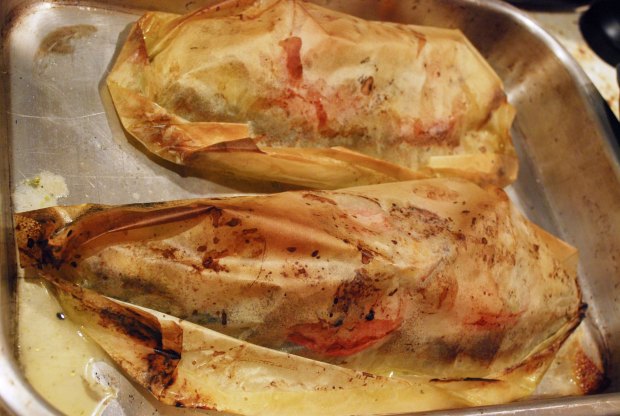
Next step: put a large baking sheet into a pre-heated 500 degree (F) oven for 5 minutes.  Pull it out, and put the fish packages on the hot baking sheet.  Bake for 10 minutes or so (depending on the thickness of the fish you’re using – mine was about an inch of thick halibut and was perfect after 11 minutes) at 500 degrees, then pull out of the oven.  Opening up the package after this is a real treat – the steam whooshes out in an aromatic burst, and one is astonished to find all the vegetables and fish cooked perfectly and in pristine shape and full color.

Papillote

This technique, cooking ‘en papillote’, is wonderful for several reasons.  1) It is very forgiving, as the steam from the vegetables and fish keeps everything pretty moist, even if you leave it a couple extra minutes in the oven.  2) It is quite healthy, seeing that you don’t need any butter or oil (though it is highly recommended to add butter or olive oil at the end as a finishing element) and you can pack the papillote full of veggies.  3) It is an impressive presentation if you put each portion in its own papillotte and serve your guests the package to open themselves at the table.  4) Finally, the technique is wildly versatile – perfect for summer improvisation!  The fish can be cod, snapper, bass, trout, or any number of varieties, and the toppings and aromatics inside could include any combination of herbs, oils, wine, fresh vegetables, cherry tomatoes, olives, citrus zest & juice, capers, spices, vinegar or greens that you like.  Try different pairings to find your favorite melange, or invite your guests to each assemble their own before dinner!

Simple Roast Salmon

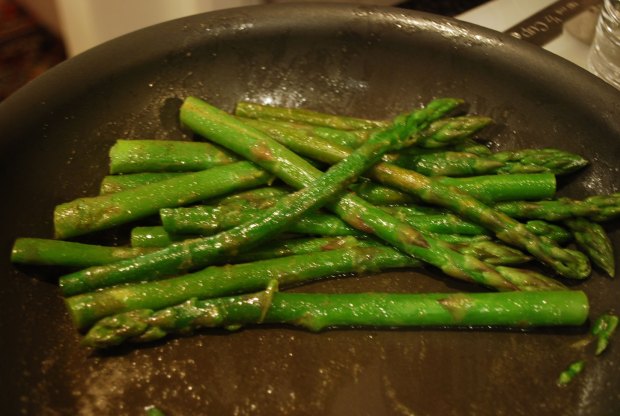
Unfortunately I had little success with my third recipe from Nina Simonds’ cookbook Spices of Life.  I wanted all three recipes to showcase the strengths of the cookbook – Kung Pao Chicken gives an easy method for making a favorite Chinese takeout dish at home and Doctored-up Ramen demonstrates a healthy, inexpensive and fun version of a nostalgic noodle – but I also intend for my Cookbook Challenge to be representative.  In the week I dedicated to the cookbook, I had two great successes (already mentioned) and a bunch of not-so-good results.  First, the cardamom asparagus which were not spectacular:
Cardamom AsparagusThen a strawberry-rhubarb crumble that had the weakest, least flavorful topping I’ve ever tasted (what a waste!):
rhubarb-crumble

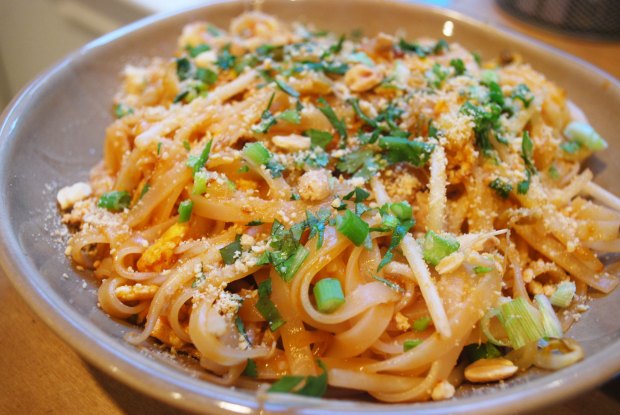
and finally, a Pad Thai that truly disappointed.  Though I really LOVE pad thai, this make-at-home version was horrific.  I would ascribe the off flavor to the ketchup (!) in the recipe — no amount of fresh lime juice or peanuts could save it.  But the pictures came out well:

pad-thai-3

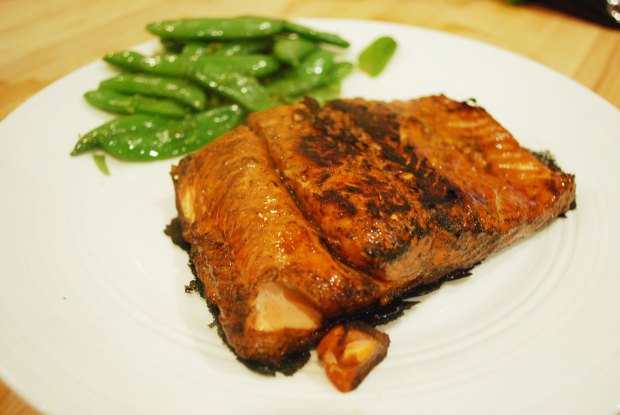
The above recipes really aren’t worth repeating here, so I won’t!  The below recipe is pretty simple, and while I wasn’t totally blown away by it, I think part of the problem might have been human error.  I overcooked the salmon slightly (by following the times in the directions, I might add) and I am unsure how (given the balsamic and soy sauce in the marinade) anyone could achieve the light pink result pictured in the book:

Simonds Salmon

As for the snap peas, I thought they tasted very light and refreshing — perfect for a hot summer lunch, picnic or potluck.  I am not convinced that the cold minty snap peas are a good pairing with the salty warm salmon.  In fact, I really didn’t like the two of them together.  I feel like I gave the cookbook ample opportunity to give me a winner third recipe, but instead I give you two recipes that were decent on their own, and very simple to make, but which do not have my wholehearted endorsement.

Pan-Roasted Salmon Served with Minty Snap Peas, from Nina Simonds’ Spices of Life

(Serves 6)

“The ginger–soy–balsamic marinade gives the seared salmon a lovely flavor and color and the simple mint dressing is a light and refreshing complement to snap peas. Nina likes to serve this dish hot, or at room temperature with rice pilaf for a festive buffet.” [she says to serve this dish hot, meaning (I suppose) the salmon, since the snap peas are ‘refreshed in cold water’ before being added to the mint dressing]

salmon-marinade6 pieces salmon fillets with skin on, each weighing about 6 ounces
For salmon marinade
2 tablespoons minced fresh ginger
3 tablespoons low-sodium soy sauce
3 tablespoons balsamic vinegar

1½ pounds snap peas

For mint dressing
3 tablespoons fruity extra-virgin olive oil
2 tablespoons lemon juice, or to taste
4 to 5 tablespoons chopped mint
½ teaspoon salt
½ teaspoon freshly ground black pepper
2 tablespoons virgin olive oil

Make the marinade: Mix the ginger, soy sauce, and balsamic vinegar in a small bowl. Put the salmon in a deep dish. Pour in the marinade and toss lightly to coat. Let the salmon sit at room temperature while cooking the snap peas.

Bring 2 quarts of water to a boil in a saucepan and add the snap peas. Cook for 2 minutes, or until they are crisp tender. Drain in a colander and refresh in cold water. Drain again and blot dry on paper towels.

Whisk the mint dressing ingredients together in a mixing bowl. Add the snap peas and toss lightly to coat. Taste for seasoning, adjusting if necessary.

Heat the 2 tablespoons of olive oil in a large frying pan over high heat until very hot. Place the salmon steaks with their coating, skin side down, in the pan, partially cover, and fry about 5 to 6 minutes covered over high heat (depending on the thickness) until the skin is crisp and the salmon meat has started becoming opaque. Carefully flip over with a spatula and cook for another 3 to 4 minutes, or until just cooked.

Arrange the salmon fillets on a serving platter and spoon the snap peas around and on top. Serve with steamed brown rice.

Calories: 370 ⁄ Protein: 34 g ⁄ Carbohydrate: 11 g ⁄ Fiber: 3 g⁄ Sodium: 570 mg
Saturated fat: 3 g ⁄ Polyunsaturated fat: 5 g ⁄ Monounsaturated fat: 11 g
Trans fat: 0 g ⁄ Cholesterol: 85 mg

salmon-final

Doctored-up Ramen

Ramen Noodles

A cookbook author and an editor/correspondent for Gourmet, Nina Simonds has shared her philosophy about Asian cooking and ingredients widely.  One of her methods for spreading the word is through her “Dinner Doctor” character, who goes around solving common challenges to making delicious, healthy dinners.  She can be seen on Oprah and her own website breaking down people’s extensive excuses – I am too tired at the end of the day, I don’t know how, it’s too expensive to buy groceries, I have to eat takeout to get to my fortune cookie, etc…

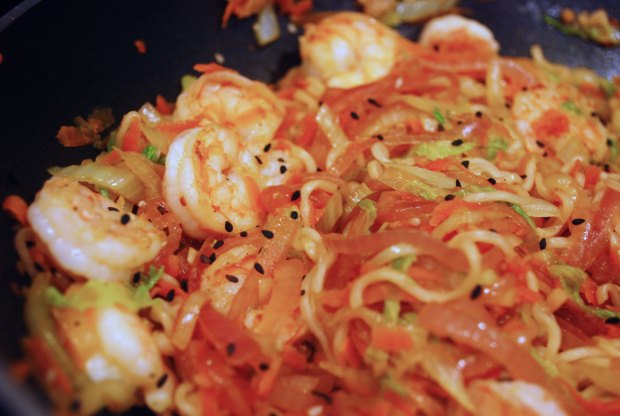
My second foray into Nina’s book, Spices of Life, is a healthful twist on doctored-up ramen.  Ramen noodles, the staple of college dorm rooms everywhere, answer almost all of the above excuses (you’ll still have to get your own fortune cookie – sorry – but Confucious says necessity is the mother of invention).  Ramen are super easy and low effort (add water and stir) and cost about 20 cents a package.  Granted, this dinner-doctored version is a bit more high maintenance, but it is also far FAR better tasting.  Toss out your “flavor pak” and check this recipe out:

Stir-Fried Ramen Noodles with Vegetables, from Nina Simonds’ Spices of Life

(serves 6)

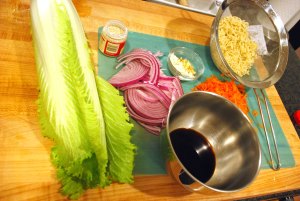
ramen-mise3/4 lb. fine dried Japanese ramen, Chinese egg noodles or angel hair pasta
1/2 small head Chinese (Napa) cabbage (about 3/4 pound)
2 Tbs. virgin olive oil
2 Tbs. minced fresh ginger
1 tsp. dried chile flakes, or to taste
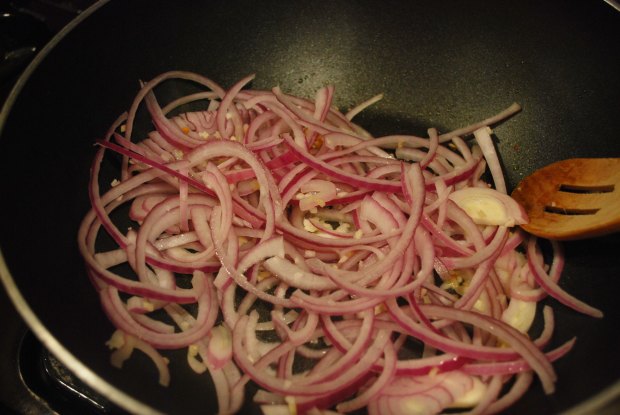
2 medium red onions, peeled and cut into thin slices (about 2 1/2 cups)
2 carrots, peeled, ends trimmed and grated
2 Tbs. rice wine or sake

Noodle Sauce (mixed together):
5 Tbs. soy sauce
2 Tbs. mirin (or 2 Tbs. rice wine or sake plus 1 1/2 Tbs. sugar)
1 1/2 Tbs. Worcestershire sauce
3 Tbs. soy sauce

2 Tbs. toasted sesame seeds

Bring 3 quarts of water to a boil in a large pot. Drop the noodles into the water and stir to prevent them from sticking together. Bring the water again to a boil and cook 4 1/2 to 5 minutes, or until the noodles are just cooked. (Since the cooking time varies with the type of noodles, refer to the package for the recommended time.) Drain the noodles in a colander and rinse under warm running water. Drain again and set aside.

ramen-onions

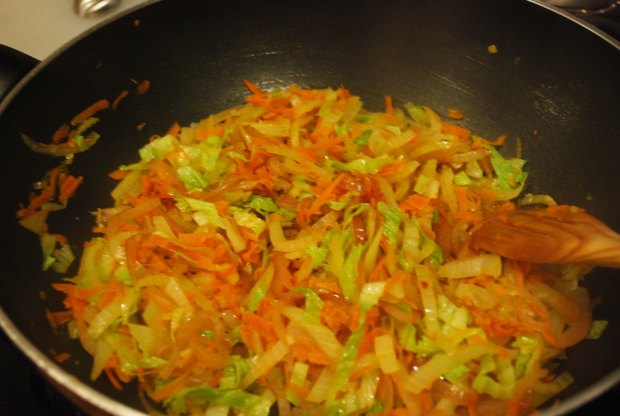
Cut the cabbage leaves from the stem. Trim the leafy tip ends and discard. Rinse the leaves thoroughly and drain. Cut them into julienne strips about 1/4 inch wide, separating the stem sections from the leafy sections.

ramen-cabbage

Heat a wok or a heavy skillet, pour in the oil, and heat over medium-high heat until hot. Add the ginger, garlic, chile flakes, and onions, and stir-fry for about a minute. Cover and cook for several minutes, until the onions are soft. Add the cabbage stem shreds, carrots, and rice wine. Stir-fry lightly, cover, and cook for about 1 1/2 minutes, until almost tender. Add the leafy cabbage shreds, toss, cover, and cook for a minute or two. Pour in the Noodle Sauce, bring to a boil, and add the noodles and the sesame seeds. Toss lightly to coat the noodles and vegetables and spoon onto a serving platter. Serve immediately.

Fancy Ramen Noodles

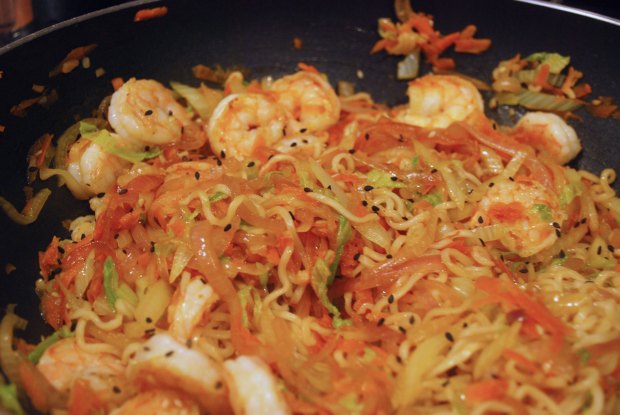
(As you can see from the pictures, I sauteed some shrimp to mix in, but as-is it is a vegetarian main course.)