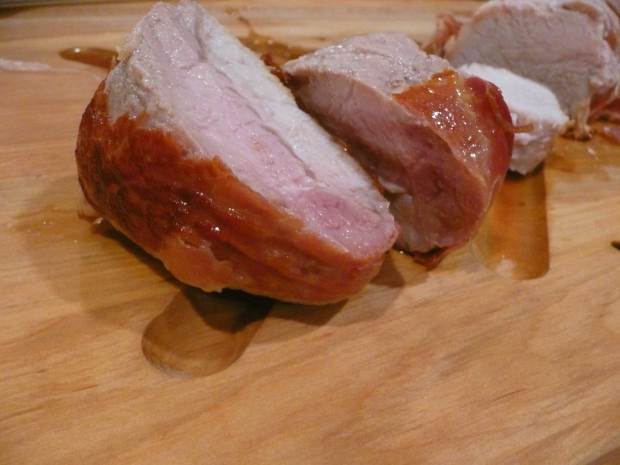
So, I was watching the “The Next Food Network Star” marathon a couple of weekends ago, and… stop. Yes, I watch all sorts of stupid reality TV shows, even ones as insipid as this. I wish I could use my obsession with food and cooking as an excuse, but I really can’t. The ‘chefs’ on this show are terrible! They overcook eggs, and over-salt their food. They burn the pine nuts and undercook their pork. I am no professional chef, but I swear I could do better than these goons.
Which brings me to this dinner. On one episode, a 19 year-old crybaby just out of culinary school made his ‘signature’ roast pork tenderloin, which was a super-simple preparation that looked pretty good. Pork + more pork = goodness. However, the challenge required the ‘chefs’ to put together a beauty shot for the camera, which would showcase their presentation skills. The pork he put up was dark red — raw as all get-out. Now, I am no proponent of cooking your pork until it is white and feels like sawdust in your mouth, but you just can’t serve it raw — sorry to tell you, boy.
However, the idea stuck with me. Pork + pork. Yessss…. it could work…. (insert rubbing of the hands and shifty eyeball look). So I went to the store, grabbed some pork and more pork, and cooked it up. Mine was really, really good. Therefore, I dub myself “The Next Food Network Star.” I already have a show title: “From My Table to Yours” and an angle – I make the same dishes as other chefs, just better. Enh… maybe I’d rather spend my time on the couch and criticizing from a distance, without the hot lights, time limits, and high-definition cameras zooming in on my pores.
Prosciutto-Wrapped Pork Tenderloin
(serves 4)
One pork tenderloin
1/4 lb. thinly sliced prosciutto
olive oil
1/2 c. white wine or vermouth
1/2 c. chicken stock
2 tsp. chopped fresh sage (or to taste)
2 tsp. butter
Preheat the oven to 375 degrees Farenheit. Dry the surface of the pork tenderloin with paper towels. If your butcher has not already done so, take your slices of prosciutto and lay them on a long piece of plastic wrap or wax paper, overlapping the slices along the long edge. Space the slices of prosciutto so that when they are all laid out, they form a rectangle that is the same length as the pork tenderloin. Place the pork tenderloin at one end, perpendicular to the direction of the prosciutto slices, like so:
 Use the plastic wrap to press the slices of prosciutto into the tenderloin, and to tightly wrap the pork up fully, like so:
 If you have the time, refrigerate the pork like this, in the plastic wrap, with the ends of proscuitto underneath the weight of the pork, for 30 minutes or more.
Heat the oil in a large oven-proof skillet or saute pan over medium-high heat. Place the pork in the hot pan, preferably placing the side where the ends of the prosciutto slices meet down first. Let cook on this side approximately 5-7 minutes or until a nutty brown color. Turn to cook the other side for another 5-7 minutes.

With the first cooked side facing down again, place the whole pan with the pork in the oven again. Roast until the internal temperature of the pork is 140 degrees, approximately 25 minutes. Let the pork rest on a cutting board, under foil, for 10 minutes before slicing. This will allow the pork to finish cooking, and the juices to redistribute.
Meanwhile, take the pan with the pork drippings to the stove and place over medium heat. Add the wine and stir with a whisk or wooden spoon to scrape up any browned bits. Let the wine reduce to a syrupy consistency, then add the chicken stock. Stir and reduce for approximately 3 minutes. Add the chopped sage and the butter, stirring until melted. Salt and pepper to taste. Slice the pork and serve with the pan sauce.


 cookbook and I have been itching to steal it for a week now. The recipes are very straightforward and simple, but with Ina’s classic flavor profiles and subtle elegance. Second, I am always looking for new, fun additions to my
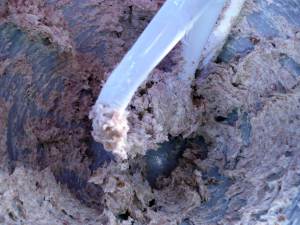 12 Tbs. (1 1/2 sticks) unsalted butter, at room temperature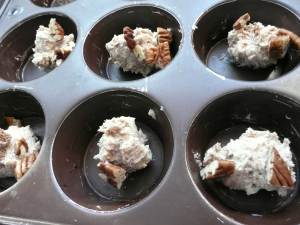
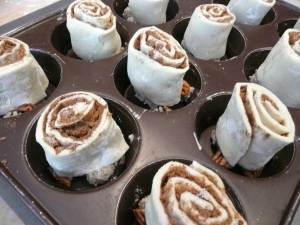 Trim the ends of the roll about 1/2 inch and discard. Slice the roll in 6 equal pieces, each about 1 1/2 inches wide. Place each piece, spiral side up, in 6 of the muffin cups. Repeat with the second sheet of puff pastry to make 12 sticky buns.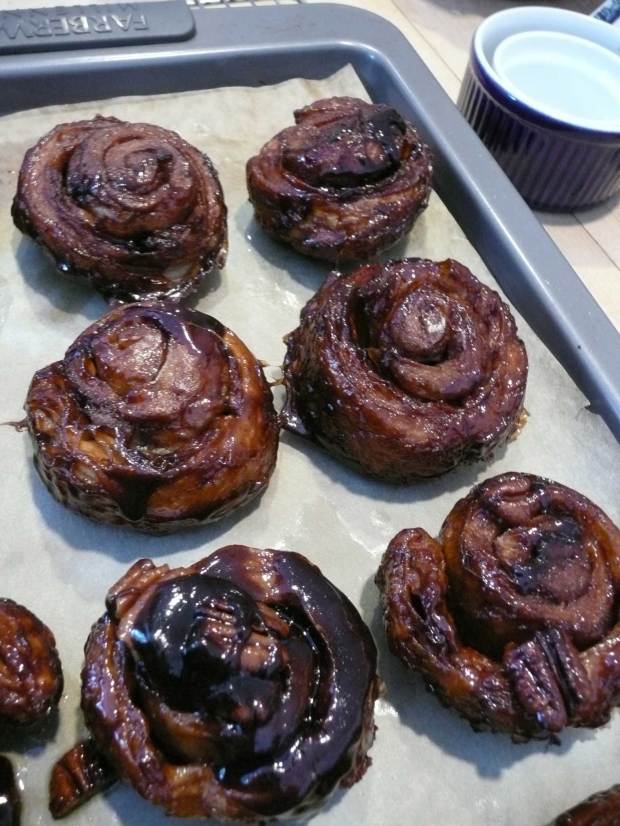
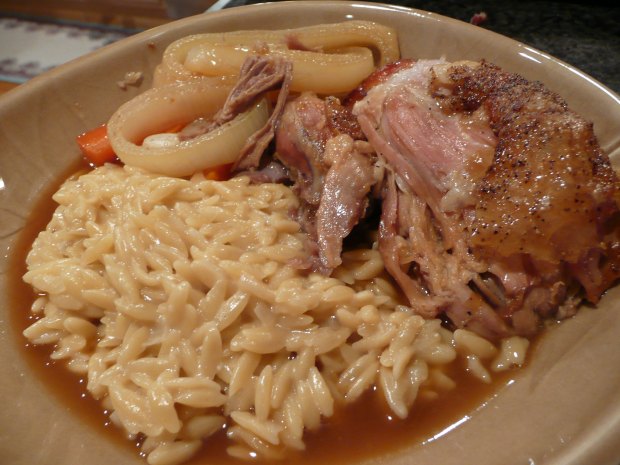

 3 c. home-made chicken stock (you can, of course, use the box or can from the grocery, but for the best version of this dish, you have to use the rich, home-made stuff)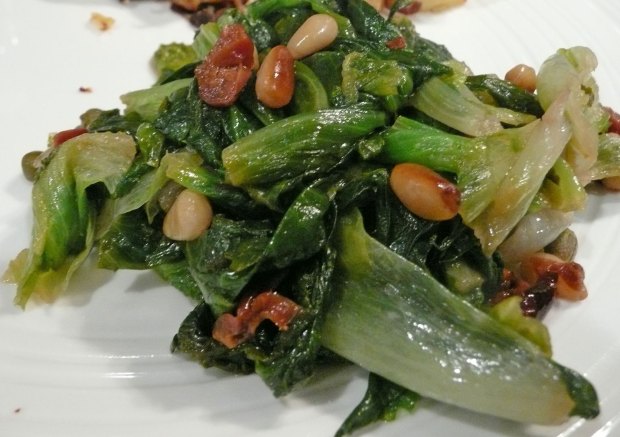
 Back to the ‘scarole, as Tony Soprano would say. I cooked it up, I photographed it, and I ate it. All of it. This was a recipe for four people – granted, I used 1 1/2 lbs. of escarole instead of 2 lbs., but honestly! So now this is my new solution to avoid having tons of rotting veggies in my fridge AND enjoy eating my daily greens – make really good, sophisticated vegetable dishes with care and they will be gone in seconds! The texture of the escarole was the true marvel of the dish – not as slimy as spinach can sometimes be, but not as tough as kale, and with a pleasant bite to the stalky bits. I would actually recommend making this without the raisins and capers – I think simplicity here (without devolving back into my steam everything in two seconds habits) would really make the escarole shine. So now, everyone – go out and eat your vegetables!
 magazine, Feb/March 2009 issue.
 Kosher salt
 Bring a large pot of well-salted water to boil over high heat. Add the escarole and cook until the stem pieces start to soften, about 2 minutes (the water needn’t return to a boil). Drain, run under cold water to cool, and drain again. This can be done up to an hour ahead of serving time.
 Add the escarole, increase the heat to medium high, and cook, tossing often, until heated through and tender, 3 to 4 minutes. Sprinkle with the lemon juice and season to taste with salt.
 From My Table...to Yours