 As they say, “when the cat’s away, the mice will play.” Though I’m not sure it’s the perfect analogy, I must say I did feel a rush of culinary freedom when I found out I was going to have a weekend in the kitchen without my husband around. Of course, of course, I miss him terribly. However, the thought of being able to cook any combination of fish, vegetables, or ethnic food I can dream up is nearly intoxicating.
I took RJ’s absence as an opportunity to tackle a second book in my cookbook challenge, and I picked one I knew he wouldn’t enjoy – Spices of Life: Simple and Delicious Recipes for Great Health
She brought with her baskets and baskets of spices — assorted seed pods, gigantic rolled cinnamon sticks, peppercorns of all colors. The guests at the museum loved being able to handle each of these, and breathe in the varied aromas, both familiar and exotic. While some of us are more adventurous than others when it comes to spices and strange flavors, few of us can describe the plant that produces sesame seeds, or have handled all of the different components of a garam masala. It was a true treat to have Nina, such a well-traveled food writer and cook, share these things with us.
Nina’s approach to cooking emphasizes the use of healthful ingredients and she describes throughout the book the restorative powers of specific herbs, vegetables and spices. The concept is a great one — incorporate these health-giving (not to mention delicious!) ingredients into your cooking on a regular basis, and improve your body’s form and function. Nina’s other website actually supplies a great list of spices and produce items along with their nutrients and perceived healthful properties, though the book is far more comprehensive.
I quickly realized that working with this book was going to take a bit of pantry makeover. Ingredients such as rice wine vinegar, mirin, and oyster sauce are not part of my everyday mise en place, but I am always happy to expand! The first recipe I tried was Kung Pao Chicken, served alongside her Asparagus with Cardamom Butter. The prep work for the chicken was pretty intensive, but I attribute that primarily to my unfamiliarity with the ingredients. When I get to the point of ‘a splash here’, ‘a handful of that’, ‘a dash of this’, I think that I can minimize my time spent and the amount of measuring cups and tablespoons I dirty up! I also think there’s a more efficient method for making the marinade and sauce mixtures, since they are quite similar at the base.
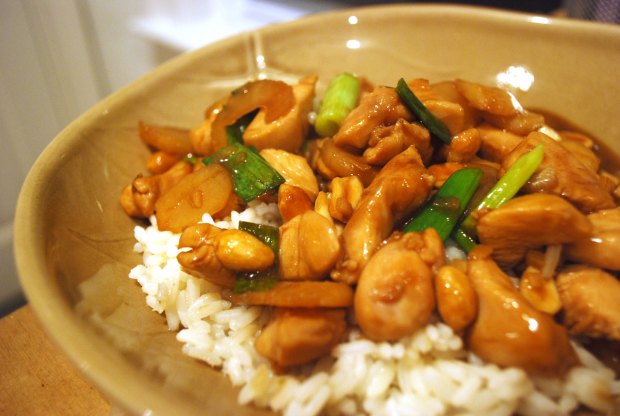
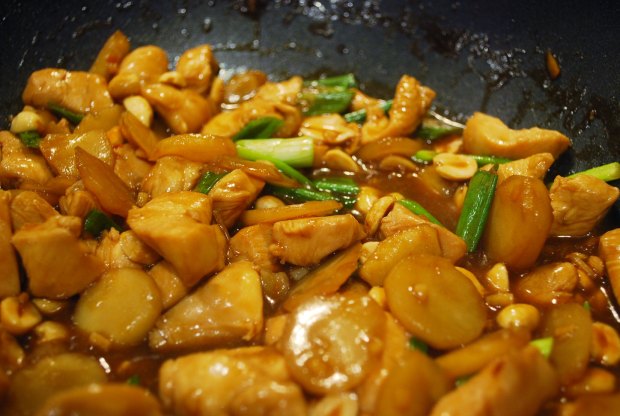
I really liked the comforting Asian flavors of the chicken dish – the salty soy sauce, spicy ginger, and nutty sesame oil mingled together nicely – but the texture was the most fun. Between the tender bites of chicken, the light snap of the water chestnuts, and the firm crunch of the peanuts, this recipe provided really exciting variety and no two bites were the same. I also thought it was great that the whole scallion was used (I hate ditching the green tops), especially since the onion provided a nice contrast, both visually and flavor-wise, to the rich brown sauce. This recipe is definitely worth a try!
As for the asparagus… I am glad to know that by including the cardamom my digestive system is better off and my ‘spasms’ may now be under control, but the flavor just wasn’t for me. Give me lemon juice, parmesan cheese, or balsamic vinegar any day — the cardamom was just too out there. I am sure I could get used to it, of course, but I think that unless I need to quell a bout of belching, I will stick to what I love.
Kung Pao Chicken, slightly adapted from Nina Simonds’ Spices of Life
(Serves 6)
12 ounces skinless chicken breast
Marinade: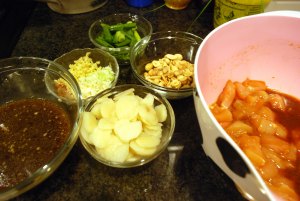
2 Tbs. light soy sauce
2 Tbs. Shaoxing rice wine
1 tsp. roasted sesame oil
2 tsp. cornstarch
3/4 cup peeled water chestnuts
2 Tbs. oil
2 garlic cloves, finely chopped
3/4 c. unsalted peanuts, dry roasted
1 spring onion (scallion), finely chopped white parts, green parts chopped into 1 inch pieces
1 tablespoon finely chopped ginger
1/4 to 1 teaspoon red chili flakes (to taste)
Sauce (mixed together):
1 Tbs. soy sauce
1 Tbs. rice wine
1 tsp. roasted sesame oil
1 tsp. cornstarch
1 tablespoon sugar
1 teaspoon Worcestershire sauce
1/4 cup chicken stock
 Directions:
Cut the chicken into 1 inch cubes. Mix together the marinade ingredients, and place the cubes in a bowl; toss lightly. Marinate in the fridge for at least 20 minutes. Blanch the water chestnuts in a pan of boiling water, then refresh in cold water. Drain, pat dry, and cut into thick slices.
Heat a wok over high heat, add 1 tablespoon of the oil, and heat until very hot. Stir-fry half the chicken pieces, turning constantly, until the meat is cooked. Remove with a wire sieve or slotted spoon and drain in a colander. Repeat with 1 tablespoon of oil and the remaining chicken. Wipe out the pan.
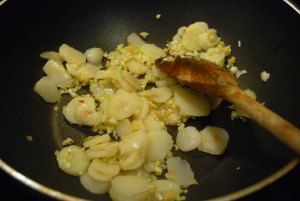
Reheat the wok over high heat, add the remaining oil, and heat until very hot. Stir-fry the spring onion white parts, ginger, garlic, and the chili flakes for 10 seconds, or until fragrant. Add the sliced water chestnuts and stir-fry for 15 seconds, or until heated through. Pour in the mixed-together sauce ingredients and scallion greens and simmer until thickened. Add the cooked chicken and the peanuts. Toss lightly to coat with the sauce and serve over rice.

 , I thought that I would be remiss if I didn’t at least try one of the recipes included at the end of every chapter in the book. What review could be complete without an attempt to walk in Kathleen’s footsteps and master a dish from her famed alma mater?

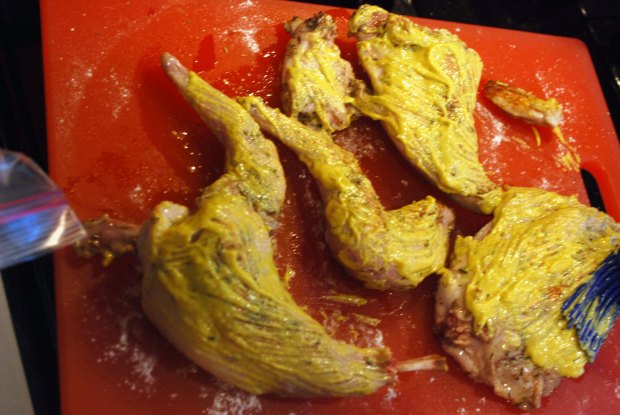
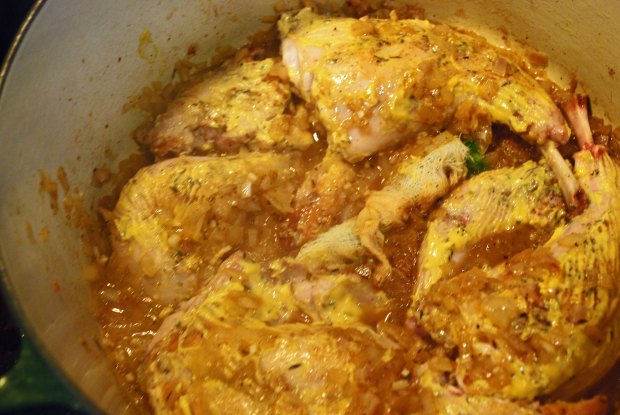

 In my experience, Mother’s Day has always included some sort of breakfast celebration – a fancy brunch in the city, a decadent spread at home, and usually a mimosa or two. I don’t know why we associate Mother’s Day with breakfasts — perhaps because it falls always on a Sunday, or because we want to celebrate our mother first thing in the morning. Maybe it is because on regular mornings she is usually the first one awake, making everyone’s coffee and eggs, and on this special day we want to beat her to the punch and treat her for a change.

 Prosciutto-wrapped and parmesan-coated roasted asparagus spears;


 is my first indulgence (and you never forget your first, I’m told). This novel, the author’s debut, is exceptionally crafted. Bauermeister sculpts each character with rich language and heartfelt empathy, revealing them slowly through their most intimate histories – an elderly couple’s crisis of infidelity and eventual reparation, a young man’s heartbreak over the death of his wife, a new mother’s conflicted self-perception – and then bringing them all together around the counter at the cooking school named in the title.
 This is not to say I didn’t enjoy the book at all. I did. As did many other
  From My Table...to Yours