I have some great news to share — my brother-in-law is engaged!! RJ’s younger brother popped the question in the middle of the Brooklyn Bridge after a twilight helicopter ride over Manhattan. A far cry from the low-key proposal I remember not so long ago, but equally momentous.
In general, it can be very hard to passively observe your siblings in their relationship cycles, watching good ones and not-so-good ones get away, knowing that you have no say whatsoever in the girl they pick as “the one” (a.k.a. “the one” you have to live with at every holiday and family vacation for the rest of your life!). Yet both RJ and I squealed when we heard the news, as Erica is just who we would have picked for Brian if anyone cared about our opinion. She is kind and sweet and beautiful and, as RJ says, she’s great for Brian. More importantly, when she comes to visit she almost always brings cake with her from all the fabulous NYC bakeries I dream about…

So today I’m featuring a recipe for a dish that I know Erica would love, since she introduced it to me (the first of many family recipe exchanges I’m sure!). The last time she was at our house, she and I got into a big love-fest conversation about the slow cooker. She and Brian live and work in the Big Bad City, and often don’t have time to cook a dinner when they get home (though their kitchen, I must say, is the biggest one I’ve ever seen in New York). To avoid takeout all the time (this is what my brother does) she often does fun dinners in the slow cooker. I have about 6 different slow cooker cookbooks in my house, but really only rotate through a couple recipes – pulled pork, beef stew, pork stew, and chili. I know it is far more versatile, but the old standbys are really good!
Erica told me about one that she really likes, Ropa Vieja, and I was intrigued. She said it was Cuban in origin and was a different flavor than the standard beef-and-wine stew. It also had lots of peppers in it, since her husband-to-be loves them (let it not be said that RJ’s limited appetite is his the fault of his upbringing – his mom and brother both love vegetables!). Literally two weeks later this recipe pops up in The Boston Globe Magazine. I might have missed it if I had not been at my parents’ house, flipping through their Sunday paper. I guess it was a sign that Erica – and this Ropa Vieja! – were destined to be in my life forever…

Ropa Vieja, from The Boston Globe Magazine, Feb. 15, 2009
(Serves 6)
Traditionally, the beef is braised in a separate step, which I have eliminated. Flank steaks are rarely as large as 3 pounds; more likely you’ll find two 1½-pound steaks. Serve with yellow rice, lime wedges, and hot sauce.
 2 tablespoons olive oil
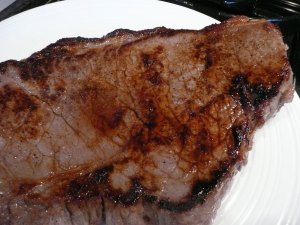
3 pounds flank steak [I used round steak, which worked fine but wasn’t quite as stringy]
Salt and black pepper
2 large onions, thinly sliced (about 3 cups)
2 tablespoons flour
6 cloves garlic, minced
2 teaspoons ground cumin
1½ teaspoons ground cinnamon
1/8 teaspoon ground cloves
2/3 cup dry sherry
1 cup homemade or packaged low-sodium chicken broth
1 14½-ounce can diced tomatoes
4 bay leaves
2 medium red bell peppers, cored, seeded, and cut into ½-inch strips
1 cup green olives, pitted and sliced
1½ cups frozen peas, thawed
6 tablespoons chopped fresh parsley
 Heat 1/2 tablespoon of oil in a large, heavy-bottomed Dutch oven over medium-high heat. Sprinkle meat with 2 teaspoons salt and 1 teaspoon black pepper, add 1 steak to pot, and cook without moving until deeply browned on bottom, about 4 1/2 minutes. Turn and cook without moving until second side is deeply browned, about 4 1/2 minutes. Transfer meat to a plate. Add 1/2 tablespoon of oil to the pot and repeat with remaining steak (reducing heat if drippings begin to burn); transfer to plate.
Reduce heat to medium, add remaining tablespoon of oil, allow it to heat for a moment, then add onions and 1/2 teaspoon of salt. Stir to coat and cook until onions just start to soften, about 2 minutes. Add flour, stir to mix, and cook, stirring constantly, for about 2 minutes. Add garlic, cumin, cinnamon, and cloves and cook, stirring constantly, until fragrant, about 40 seconds. Add sherry and chicken broth, increase heat to high, and use a wooden spoon to scrape up the brown film on bottom of pot until it is all dissolved, about 1 minute. Add tomatoes, bay leaves, and browned meat with accumulated juices, push it down into liquid, bring to a boil, reduce heat to very low, cover, and simmer until beef is tender, about 2 1/2 hours. [Though this recipe uses a dutch oven on the stove top, there’s no reason you couldn’t put the meat and liquids in the slow cooker for 8-10 hours on low.] Remove steaks and when cool enough to handle, cut in half across the grain. Use 2 forks to break down meat into thin shreds and return to pot.
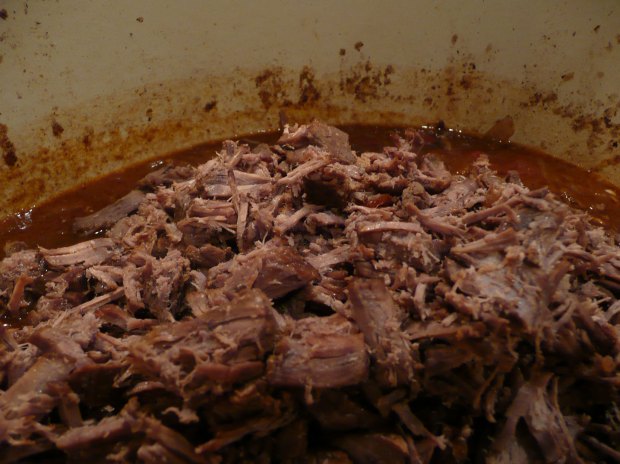
Add bell peppers to the pot, submerge them in liquid, cover, increase heat to medium, and cook until just tender, about 10 minutes. Remove bay leaves, add olives, peas, and 1/2 teaspoon each salt and black pepper, stir to mix, and cook until peas are heated through, about 5 minutes. Add 4 tablespoons of parsley, taste stew, and adjust seasoning with salt and black pepper, if necessary. Serve at once, sprinkling with remaining parsley.

 Generally I consider glazed fruit tarts to be a summer treat – something ideal for the back porch on a muggy evening after a meal of grilled meats and cold beer. Nothing beats the supple flavor of a juicy strawberry on a light lemon custard and buttery sablé crust after a hot day. Only in-season and perfectly ripe berries are worthy of such a spotlight: thus summer and fruit tarts are inextricably linked in my mind – so much so that the tart concept doesn’t even occur to me when I think about making a dessert in the months from October to May.
 Press the dough evenly into the bottom and sides of a 9-1/2-inch fluted tart pan with a removable bottom—the dough sides should be 1/4 to 3/8 inch thick. To smooth the bottom, cover with plastic wrap and press with a flat-bottom measuring cup or glass. Freeze the covered shell for 30 minutes. Meanwhile, position a rack in the center of the oven and heat the oven to 400°F.
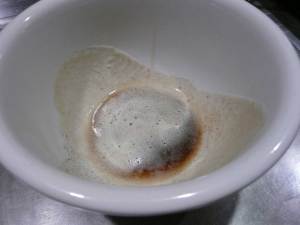 In a small saucepan, heat the butter over medium-high heat until it melts and the milk solids turn brown, swirling the pan occasionally for even browning, about 3 minutes. Immediately pour into a small heatproof bowl to stop the cooking.
 Spread the filling evenly in the tart shell and set aside at room temperature while you prepare the topping.
 A while back, I introduced you to the nouvelle cuisine of my father-in-law and his famous
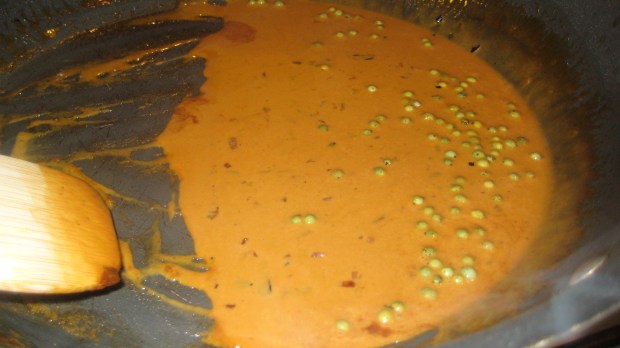
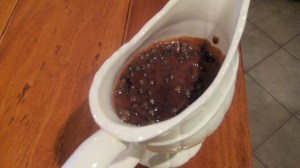 Pour off all but 1 Tbs. fat from the pan. Set the pan over medium heat, add the shallot and cook, stirring occasionally, until translucent, about 3 minutes. Off the heat, add the cognac. Return the pan to medium heat, bring to boil and cook until the cognac is almost evaporated, about 3 minutes. The cognac may ignite, but it will burn off. Add the demi-glace, cream and peppercorns and whisk to combine. Cook until the mixture is slightly thickened, 1 to 2 minutes. Add the butter and whisk until incorporated. Season with salt and pepper, and pass the sauce alongside the filets or pour over them just before serving. Serve immediately. Serves 4.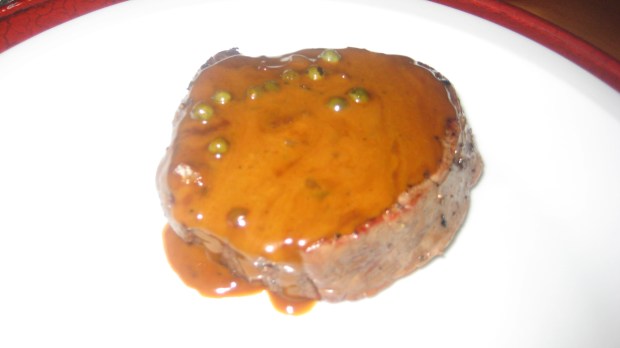
 From My Table...to Yours